Tom Benn on Future Château, Sessionable Wine and Saying Yes More Often
In Conversation with Tom Owtram
When Tom Benn started thinking seriously about alcohol and everyday life, he wasn’t trying to give wine up. He was trying to find a way to say yes to it more often.
The idea that set everything in motion was simple: if wine were naturally less strong, you could open a bottle on any evening without turning it into “a big night”. That thought led to five years of experiments across three continents – from piquette trials in South Africa, to de-alcoholisation in Bordeaux and Burgundy, to a shed in Australia where he finally found a method that worked.
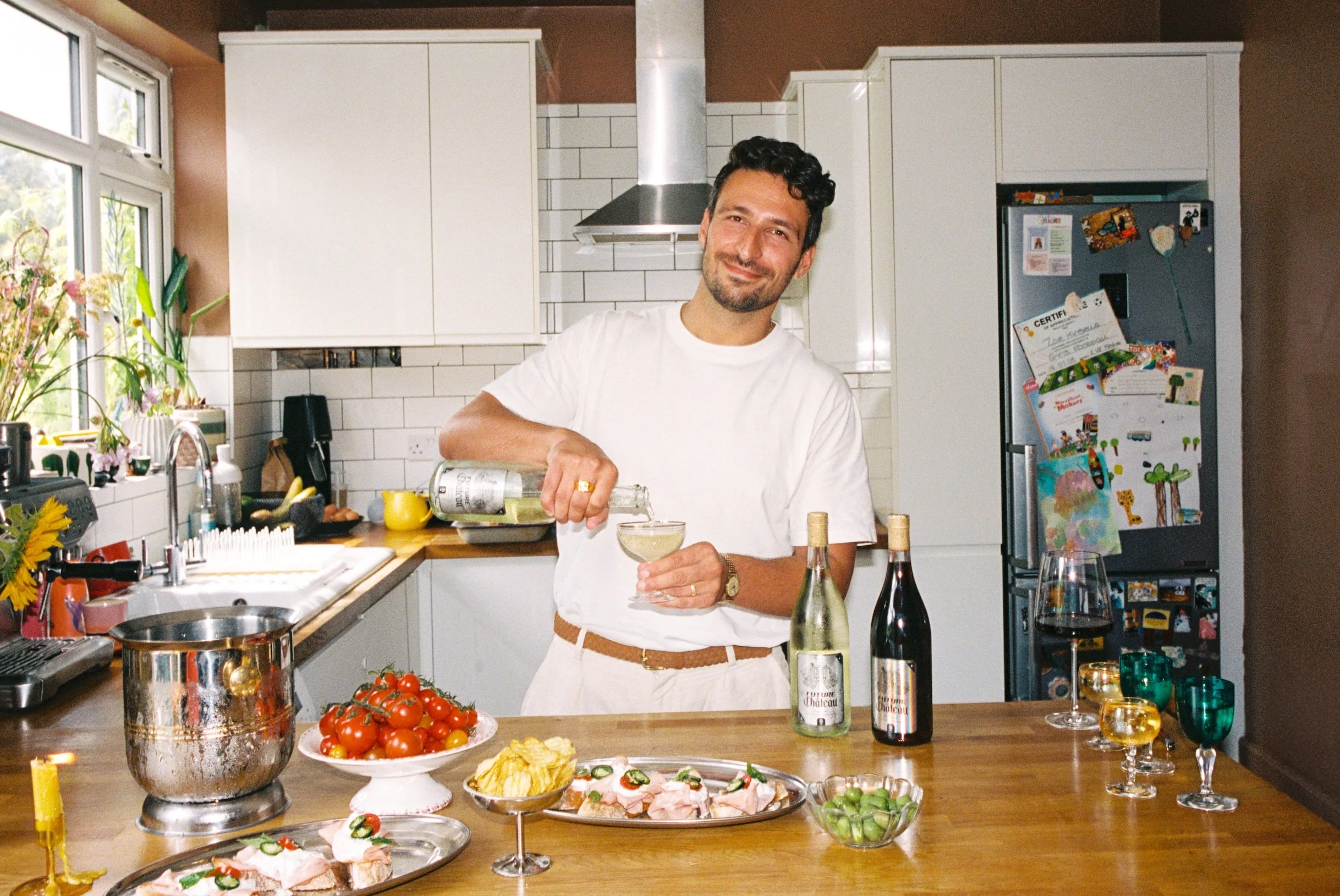
The result is Future Château: what Tom calls “sessionable wine” – mid-strength, made with traditional patience, designed for the realities of modern life without losing the ritual, flavour and joy that make wine feel special.
In this conversation, Tom reflects on failed experiments, patient winemakers, the role of farming, how branding evolved once real customers showed up – and why Future Château isn’t about drinking less, but about creating more moments worth saying yes to.
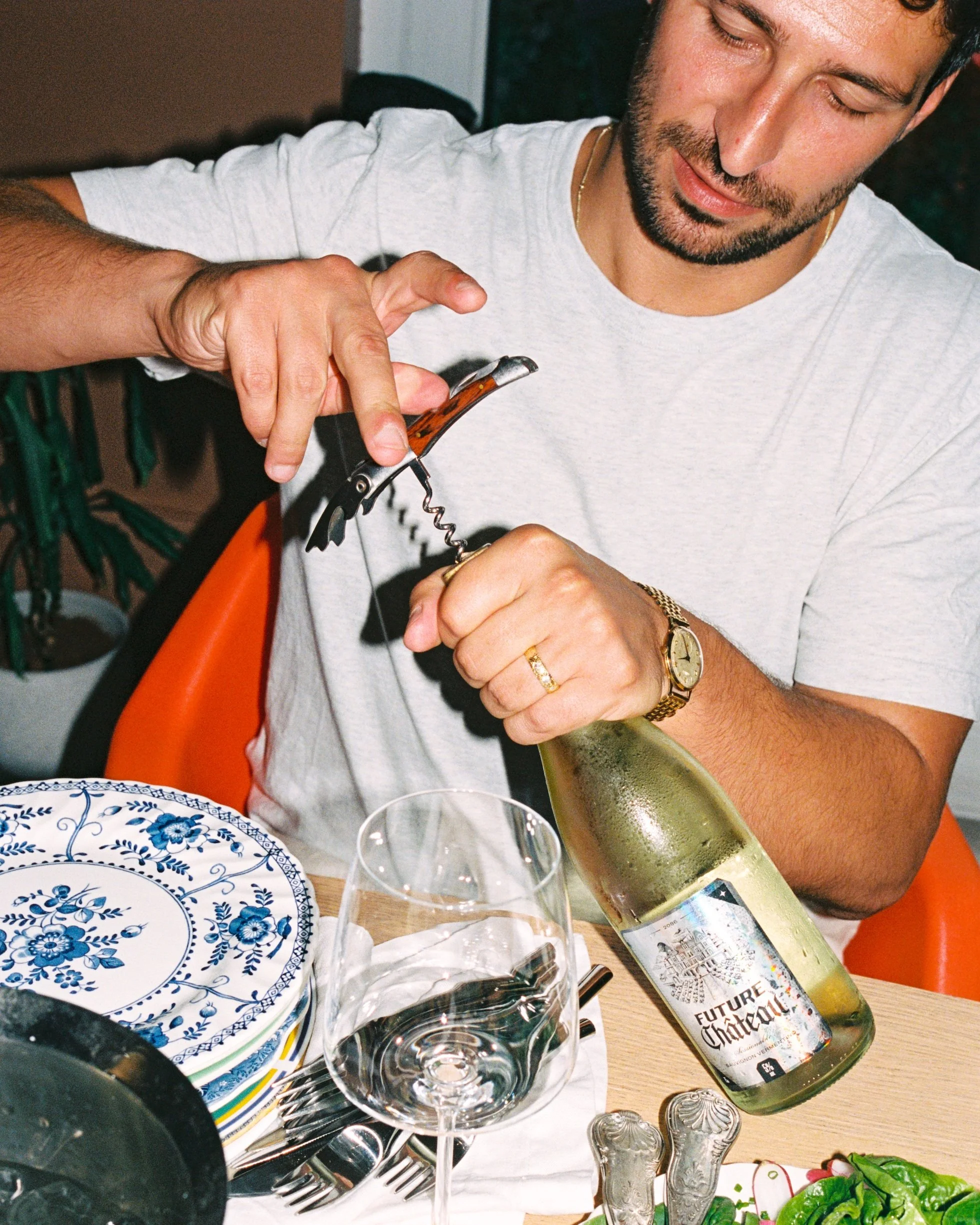
A different starting point
You’ve said this all began with the idea that you’d be a better person – and the world might be a better place – if wine was less strong. What did that mean in practice?
After I’d made that decision – that I’d be a better person, and the world would be a better place, if wine was less strong – I started researching what would need to be true for that to actually work. I wanted wine you could open any evening you wanted, without it becoming “a big night”.
The first thing I fell in love with was piquette. It’s an ancient product, often made on French vineyards and drunk by the staff, but it’s illegal to sell – for no particularly good reason as far as I can tell.
I was optimistic that if I could create something genuinely good, maybe we could lobby the government and get that overturned. It was an EU rule and this was post-Brexit, so I thought there might be a way around it.
Learning from piquette
For those who don’t know it, what is piquette – and what did you discover when you tried to make it?
Piquette is basically what you get if you take the mash – the stems, stalks, pressed grapes, all that – and soak it in water. You let it macerate for as long as you want. My method was ten days.
At the end you’ve got grapey water. You put that in bottle with a bit of sugar. Most people use honey or agave; I was using fresh pressed grape juice. I had a Pinot Noir piquette with Syrah juice in there that was honestly delicious.
This was in South Africa. The sugar ferments and you end up with something roughly 5% ABV if you’re careful. Wine-y and really interesting. Some of the batches were terrible, but some were great. That Pinot/Syrah one tasted like a cross between a really good funky natural wine, a bit kombucha-like, a bit farmyard, and a bit like a hard seltzer. It was genuinely delicious.
The problem was consistency. Even within a single batch it was unpredictable. The microbe risk was through the roof – you could see the lawsuits. It was also technically illegal. And inter-year consistency would have been even worse: it’s the last thing a vineyard wants to do at the end of harvest, when everyone just wants to go home. Even if I made it well once, reproducing it would be a nightmare.
So I took a few bottles of the best stuff back to the UK and tried a different route.
Why you can’t fake wine
You then tried to recreate those flavours with mixologists. What happened?
I approached some of the best mixologists in the world – people who had recently won “best cocktail bar in the world” – and asked them, over a cocktail:
“Do you think you could mix something that tastes like this, but without fermentation – just blending ingredients?”
They all said, “Absolutely, no problem.” So we tried. We spent two years on it and didn’t come close.
It reminded me of something I tell people a lot: humanity is unbelievably good at making wine. We’ve had thousands of years and really strong incentives to get better at it. What else have we been trying to optimise for 3,000 years? Our standards are now incredibly high, and you just can’t replicate that in the aggregate.
So that method failed. I learned a few useful things, but we didn’t get anywhere near where I wanted to be.
De-alcoholisation and dead ends
You were initially resistant to de-alcoholisation. What changed?
I’d been trying to avoid de-alcoholising the whole time. It didn’t sit well with me – not for very rational reasons, just a dislike of “processing” something. But eventually I thought, fine, I’ll try it and see what everyone’s getting wrong.
I partnered with people in Bordeaux and then Burgundy, and we tried everything:
partial de-alcoholisation
full de-alcoholisation and blending back
de-alcoholising one grape and blending with another
My big hypothesis was that most people making low and no think it will taste bad anyway, so they don’t use their best base wine. That turned out to be true to some extent. So we put amazing wine through the process.
We did make some things that tasted okay, but they were always a bit thin, a bit disappointing, often a bit too sweet. I was really close to giving up at that point.
Living with the gap
What were you drinking personally during this phase? Did you find anything you liked in the existing low/no space?
I bought everything I could get my hands on, and I didn’t like any of it. That’s no disrespect to the people making it; I know how hard it is. Some people clearly do like those wines – I just didn’t.
So mostly I tried not to drink too much. I basically didn’t drink wine on weekdays. Most nights I’d look longingly at the rack, know exactly what I wanted to open, and then tell myself, “No, Tom.” Sometimes I’d have a beer instead, because a 330ml bottle at 5% felt manageable.
There’s a graph I’ve seen a lot – net mortality improves with about one alcoholic drink a day, then crosses zero around 1.8 drinks and goes negative after that. I’d use that to justify a beer. But what I really wanted was a few glasses of wine, and that would have been too much for a Monday or Tuesday.
Everyone has their own rules in their head. Mine just weren’t compatible with the way I wanted to drink wine.
A hypothesis breakthrough
So what unlocked things for you?
At some point I had a hypothesis breakthrough: everyone assumes the answer is a very cool climate. What if the answer is a very hot climate?
Alcohol starts as sugar, so step one is controlling sugar. Sugar is affected by:
intensity of sunlight
duration of sunlight
amount of chlorophyll
Most people control sugar by focusing on just one of those. I started asking: what if you control the others instead?
I found some people in Australia working in a very hot climate who liked the idea. It’s hard to find wineries willing to experiment with you when you’re nobody, with no company, but these guys were up for it.
We worked in a shed in the corner of a winery and, there, we cracked it. We made the first good liquids I’d produced since those piquettes in South Africa.
The end process actually borrows from everything I tried before – things I learned in South Africa, in France, in the UK. It’s a long, slow process with a lot of patience. You can’t rush it. Just huge amounts of tasting and blending and re-tasting.
We also don’t skip traditional steps. The Grenache we use in the Syrah–Grenache is aged in oak for two years. The Chardonnay in the sparkling wine is aged on lees. It’s not a cheap product to make, but I was adamant that we’d worry about price later. First we had to prove you could make a genuinely delicious wine below 8–8.5%.
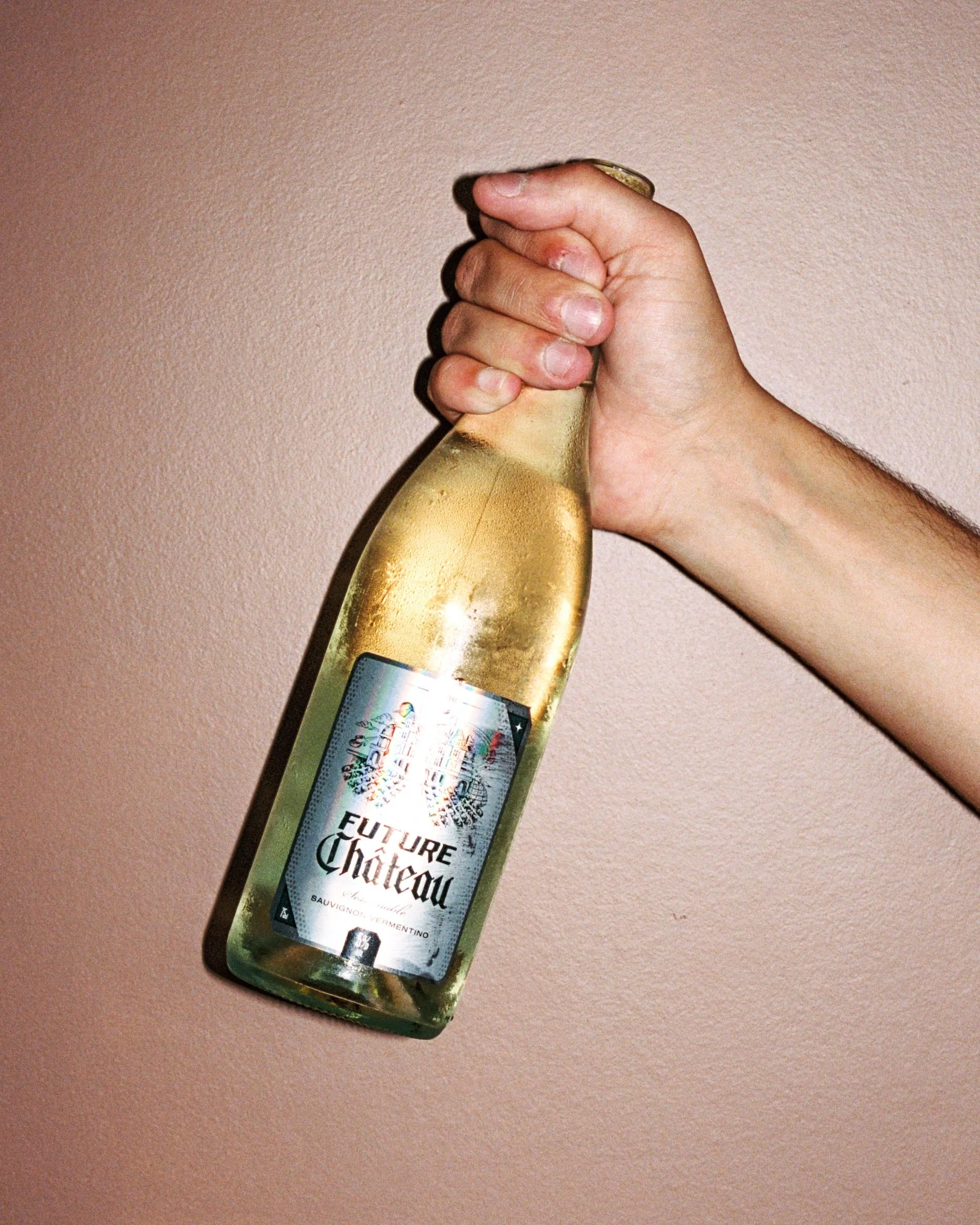
From shed to Selfridges
How did that become Future Château as it exists today?
We made the first good liquids around March. Getting them out of Australia and into the UK took ages. I’m not an experienced exporter or importer, so I made mistakes. Eventually, the wines arrived.
We launched into Selfridges about three weeks ago. They were my first customer, which is a strong start. They get inundated with emails, so it’s hard to get their attention. But once I managed to get samples in, they called me straight away and said, “We loved it. It’s the best thing we tried.” They’ve been amazing.
What people actually care about
How important is your own story when you talk to buyers and drinkers?
I thought people would really care that it took five years and three continents. I assumed that would be a big selling point.
Honestly, I don’t think they care that much. People care about what it does for them.
I made another mistake early on when sampling. I’d say, “It’s only 5% and 33 calories per 100ml,” and people would stare back at me. Then I’d explain, “That means you can have half a bottle and it’s like one can of lager in terms of alcohol, and one glass of tonic in terms of calories.” Still nothing.
But if you say, “If you get home on a sunny Monday evening and want to eat in the garden with a bottle of wine, now you can,” people get it. That’s a real moment in their lives.
I also tell people: this isn’t about giving up full-strength wine. If friends come over at the weekend, we’ll drink full-strength wine. Then we switch to Future Château and can keep drinking wine all afternoon. No splitting headaches, no awful hangover, no dealing with a 6am wake-up and a wine headache. It’s a good-times extender. That’s what resonates.
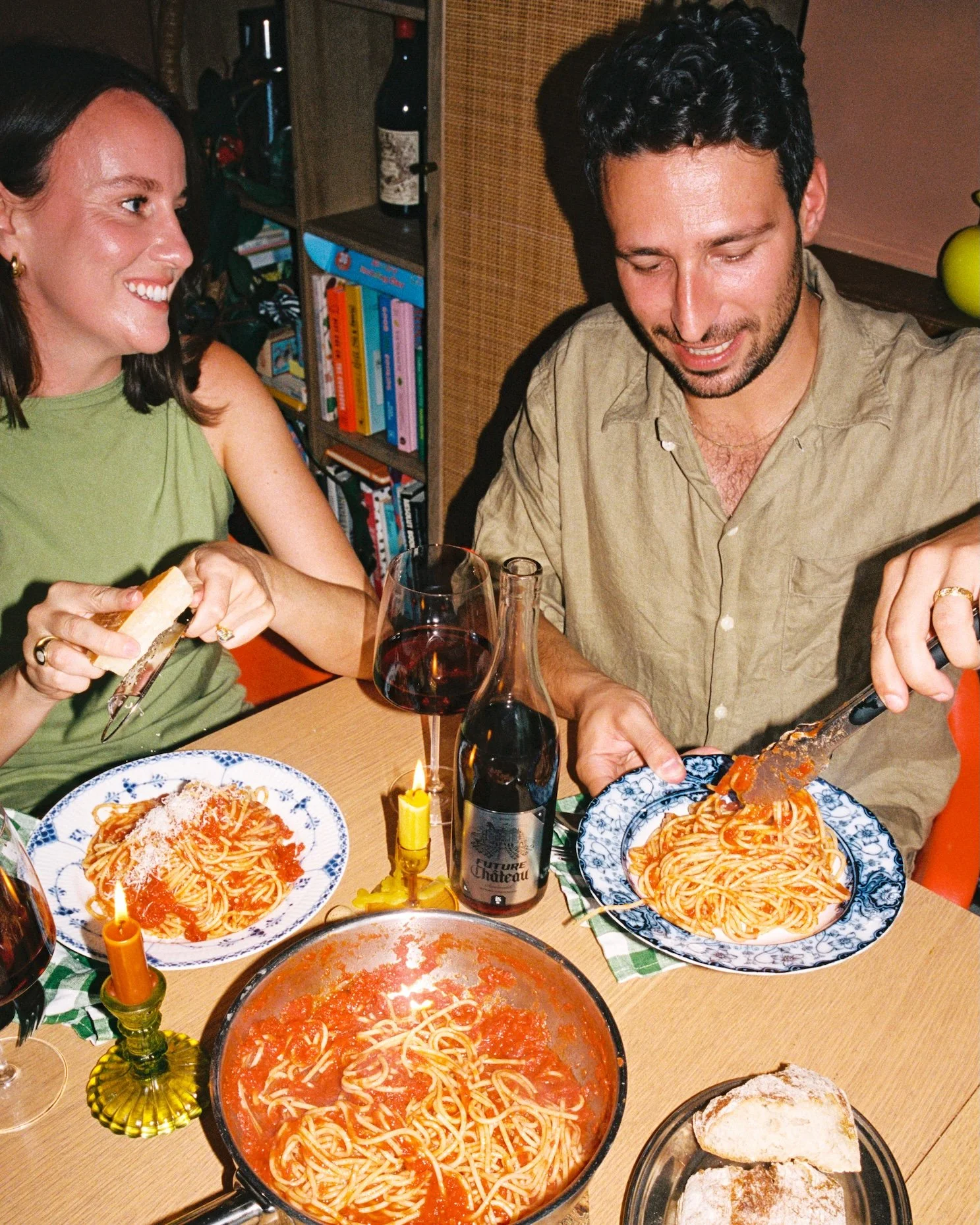
Branding, rules and who really buys it
You’ve got a distinctive brand. How did you land on Future Château’s look and feel – and how is it evolving?
Originally, I thought my core customer would be millennials and Gen Z who don’t really drink wine but would like to. A lot of them have had wine modelled to them as something adults do – in films, TV, from parents – but they don’t buy it. They’re worried about not finishing the bottle, or not wanting half a bottle each.
So I thought: if they’re not buying wine already, I shouldn’t look exactly like wine. I wanted to look adjacent, a bit different.
I had no budget. I’ve still never raised money. So all the thinking had to come from me. The idea was: what if it’s a classic French château, but in the future? Hovercrafts, holographic finish, borrowed fonts – I took “Future” from Back to the Future and “Chateau” from the original Arsenal logo. It was a mash-up of old and new: honouring traditional techniques, but aimed at how people drink today.
For that younger consumer, it really works. But since launch, I’ve spent a lot of time talking to actual customers, especially repeat buyers, and the pattern is different.
The person who immediately gets the product is often an early-40s, busy, successful woman. People whose day jobs are things like creative director, architect, lawyer. They’ve got kids, big responsibilities. A mid-week hangover would be a disaster, but they still want nice things. They want to drink wine while they cook and eat dinner, but can’t deal with the consequences of doing that at full strength several times a week.
For them, Future Château just solves a problem. But they don’t necessarily love the current branding, because it wasn’t made with them in mind.
So for the second vintage, I’m moving the look a little closer to classic wine. Breaking fewer rules. Maybe honour most of the rules and just break one or two.
Working with winemakers
How have your winery partners responded to the project?
It’s been both a creative exercise and a business opportunity for them.
Winemakers are often more artist than businessperson. If I email about payment terms, I might wait three months. If I email about maceration, I get six hours of their attention. They’re passionate. No one gets into wine to get rich. What’s the joke? “The best way to become a millionaire in wine is to start as a billionaire.”
What hooked them was curiosity – talking through what I’d learned and what I was trying to do. They also understand that lower-alcohol wine that still tastes good is likely part of the future. Everyone in the industry sees the data on younger drinkers.
They will tell you I’m terrible ROI. In terms of time spent versus money I’ve spent with them so far, it’s a bad deal. But they love the challenge. My hope is that as we grow, it will become a good investment for them too.
Farming and precision at 5%
How important is farming to what you’re doing?
It’s fundamental.
I mentioned the “three horsemen of sugar in grapes”:
chlorophyll
sunlight intensity
sunlight duration
Geography dictates one, farming dictates the other two. Step one of the whole process relies on buy-in from farmers.
On top of that, low alcohol gives you nowhere to hide. In a 15% wine, alcohol covers a lot of rough edges. In a 5% wine, any fault sticks out like a spike. So everything else has to be perfect.
That means attention to detail at every stage: no stray stalks in the press, no sloppy decisions. You need partners who care as much as you do, not because it’s lucrative (yet), but because they’re genuinely invested.
Sustainability and the glass problem
You’ve talked about sustainability. What does that look like for Future Château?
A lot of it will only be possible at scale.
Most of our grapes are already grown organically, some biodynamically, but getting formal certification at my size makes no financial sense. As you grow, you can ask for more, insist on more.
The big one that frustrates me is glass weight. It’s probably the single biggest lever the wine industry has to reduce its carbon footprint, and it has zero impact on quality. But customers associate heavy bottles with higher quality and higher price.
When you’re tiny, fighting that battle is risky. If I went with the lightest glass now, I don’t think the business would make it, and then what’s the point? I sometimes say: you need a sustainable business before you can have a sustainable business.
The goal is that once the brand is strong enough, we can take people with us on that journey and say, “Bottle weight has a huge carbon impact and no quality benefit.” But you can’t shout that into the void when no one knows who you are.
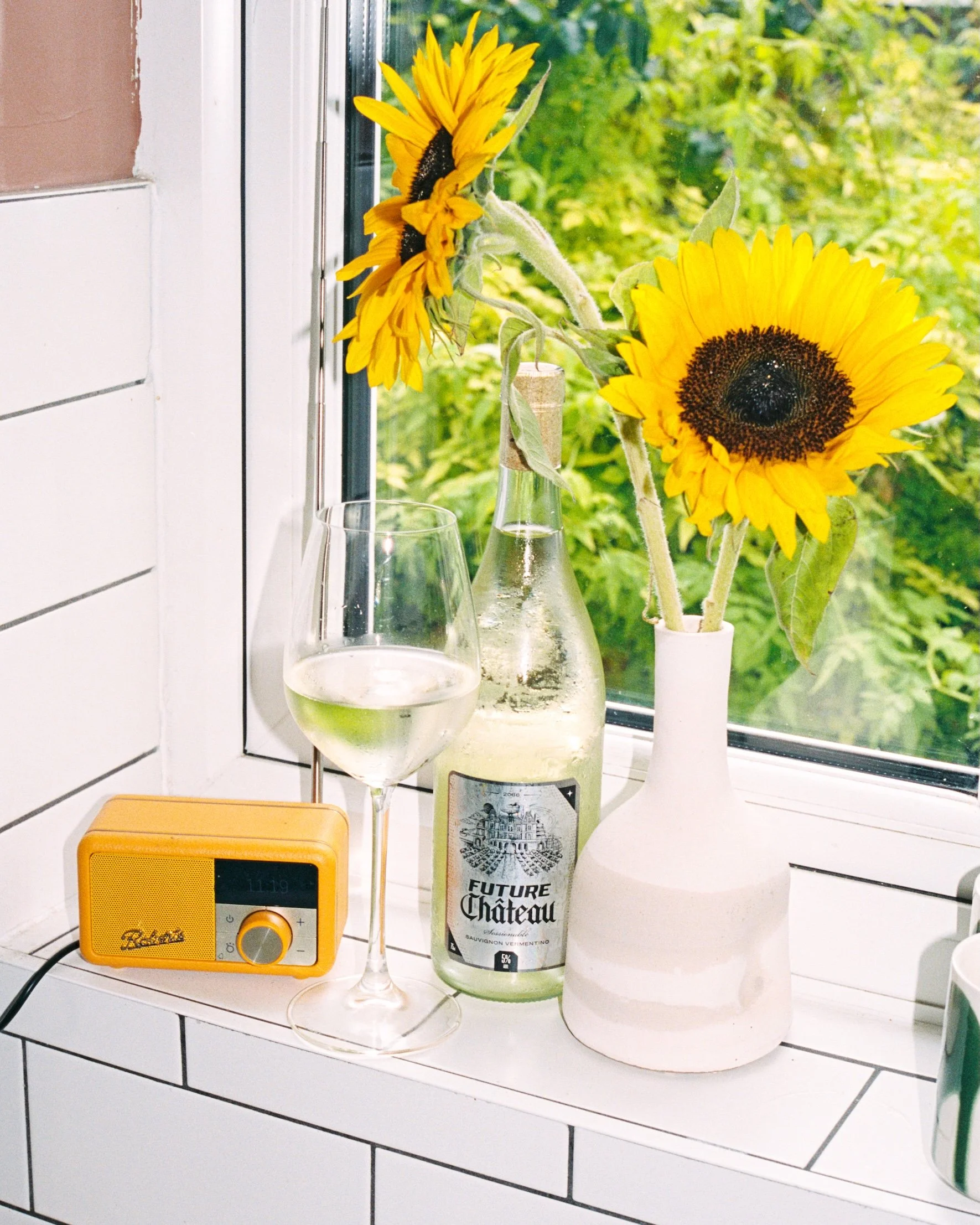
Where sessionable wine belongs
You’ve mentioned wanting Future Château to show up in places wine doesn’t usually appear. What do you have in mind?
I think a lot about where it wouldn’t be shocking to see wine, but would still be surprising.
In a previous business, Nike approached us out of the blue and asked if we’d come to an event with a protein pancake bar. We ended up working with them for a couple of years and talking to tens of thousands of people in person. It worked because peanut butter at a Nike run was surprising, but not inappropriate.
I’m trying to find the equivalent for sessionable wine. Maybe it’s book clubs, maybe yoga studios.
We recently had a baby, and we went to Bump and Baby (like NCT). It struck me as a perfect example: you’re in a pub, most dads have a pint, most mums have lime and soda, and then at the end there’s a token for one drink. Future Château could fit that space – it’s about a third of a glass of normal wine in terms of alcohol.
I’m not making any medical claims, and everyone has their own risk tolerance, but I’d love to be present in those kinds of occasions.
Not about less, but about more
Most low/no brands talk about moderation and drinking less. Your language is different. How do you see Future Chateau philosophically?
Everyone else in low and no talks about drinking less, and I respect that. It’s just not my angle.
I didn’t start Future Château to reduce my drinking. I started it so I could drink wine more often. My alcohol consumption has actually gone up since Future Château became a thing, not down.
I still drink full-strength wine sometimes at the weekend. But now I can drink Future Château on other nights when I used to say no. That’s the key difference.
I’m not trying to persuade people to swap their one glass of full-strength wine for a glass of Future Château. I want them to say yes to Future Château on nights when they currently feel they have to say no to wine altogether.
I’m not focused on reducing alcohol. I’m focused on increasing joy.
Packaging, generosity and what comes next
You’ve hinted at other formats. What would you like to explore as the brand grows?
I’d love to do cans – there are so many situations where a can of 5% wine would be ideal. I’d love big formats too. Part of the fun of Future Château is that it looks more indulgent than it is.
Imagine turning up to a party with two magnums. It looks wildly generous, but in alcohol terms it’s not that extreme. Generosity is one of my core values. I’d also love to do bag-in-box; I’m a big believer in it as a format.
But I also think I broke too many wine rules with the first round of packaging. So I’ll probably move a little slower on radically different formats. If I could wave a magic wand, though, I’d change how people think about lighter bottles. That’s the big one.
Disrupting from a place of love
Do you see Future Château as disruptive?
I hope so, but not in an angry way. Some brands disrupt by telling people they’ve been lied to or that everything is broken. That can work, but it’s not me.
I love wine. This whole business is a love letter to wine. I want more people to be able to enjoy it, more often, in a way that fits their lives.
That’s the kind of disruption I’m interested in.