Reflections from a Year of Conversations with Tom Owtram
As the year draws to a close, it feels like a natural moment to pause and look back.
Over the past year, conversations through Between the Vines have unfolded across vineyards and dining rooms, estates and organisations, kitchens and cellars. They’ve involved growers, winemakers, sommeliers, chefs, founders, communicators and leaders - each shaped by their own context, pressures and priorities.
Those conversations have spanned continents and disciplines: from Burgundy to Wales, Napa to Palestine; from fine dining rooms to vineyards, boardrooms to back-of-house kitchens. Each one stands on its own. But when you sit with them collectively, certain themes begin to surface - not as conclusions, but as shared realities that feel worth paying attention to.
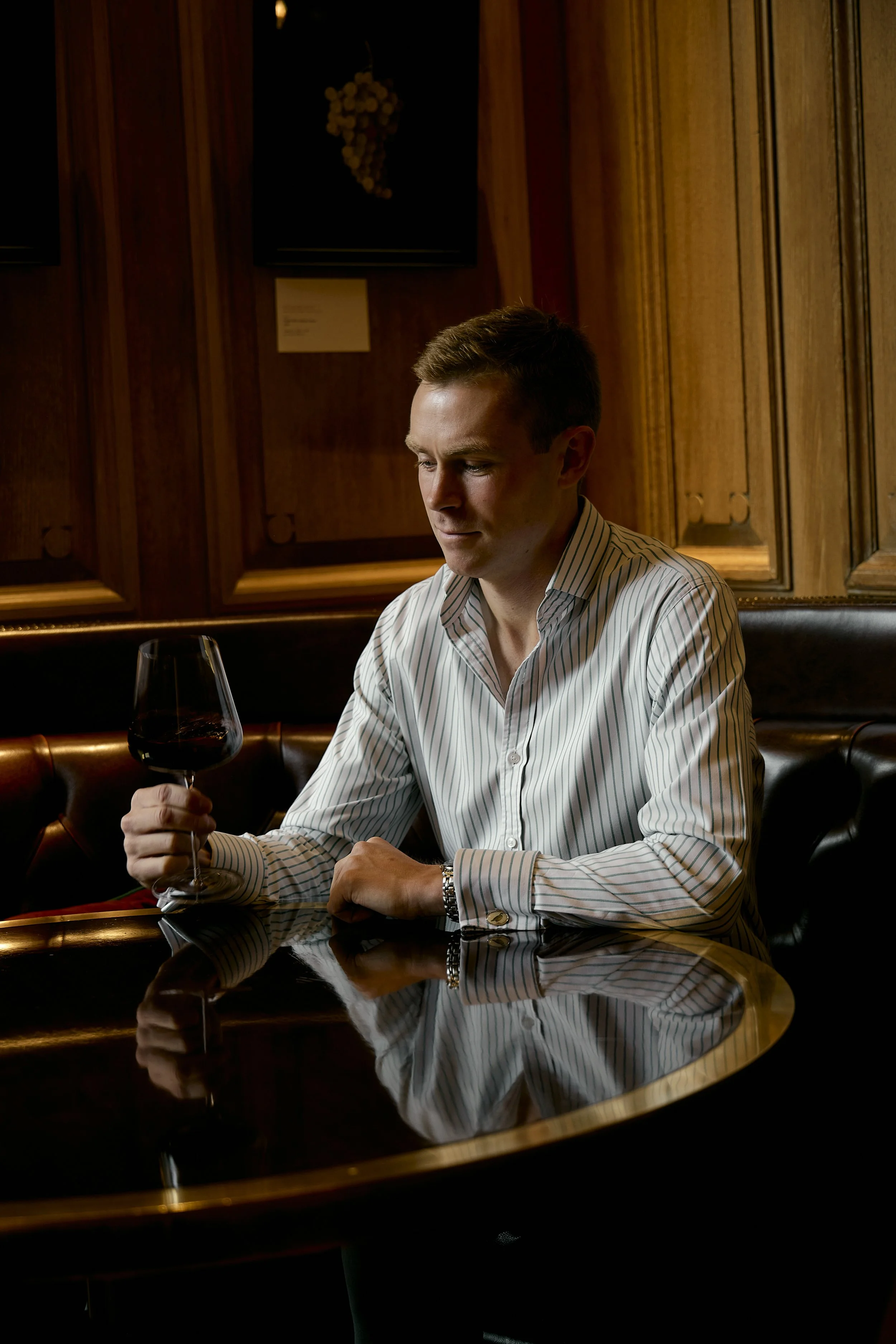
“Even in uncertain times, wine continues to bring people into conversation, and that feels like a hopeful place to start.”
Tom Owtram, Founder & Editor
Living with pressure
Pressure has been present, in one form or another, in almost every conversation.
Climate volatility. Rising costs. Shifting patterns of drinking and dining. Labour shortages. Uncertainty about what the next few years might bring. These challenges are not new, and they are not evenly distributed, but they are increasingly part of the background noise of everyday decision-making.
What’s notable is how rarely people frame their responses in terms of quick fixes or grand solutions. Instead, many talk about adjustment: changing how land is farmed, how teams are supported, how businesses grow - or whether growth itself still makes sense in the way it once did.
Sustainability, in these conversations, tends not to appear as a headline or a finished destination. It shows up in smaller, ongoing choices: how soil is treated, how suppliers are selected, how people are looked after, how risk is shared. Often imperfect. Often unresolved. But grounded in the reality of day-to-day work.
Fewer certainties, closer attention
Another pattern that’s emerged is a noticeable shift away from certainty.
Fewer people speak in absolutes. Fewer claim to have the answers. Instead, there is more talk of testing, learning, adapting - and of paying closer attention to what’s actually happening, rather than what should be happening in theory.
This isn’t hesitation or lack of confidence. If anything, it reflects a deeper seriousness. Producers describe working more closely with what the land is telling them. Hospitality leaders reflect on what guests actually respond to, rather than what tradition dictates. Communicators wrestle with language that feels increasingly blunt or outdated for the complexity they’re trying to describe.
There’s a sense that clarity doesn’t always come from knowing more, but from listening better - to people, to place, to changing conditions.
Hospitality as a human practice
Across very different roles and settings, one idea returns again and again: hospitality works best when it stays human.
Sometimes that shows up in how a table is read, or how a wine is poured. Sometimes in leadership decisions, or in the way teams are supported behind the scenes. Often it’s about creating environments where people feel comfortable enough to engage - without performance, intimidation or expectation.
Wine, in this context, is rarely treated as an object of expertise alone. More often, it’s described as a bridge: into conversation, into place, into shared experience. Something that can open space between people, even briefly, in a world that often feels rushed and transactional.
Again and again, the most meaningful moments described aren’t about perfection, but about connection.
Measured optimism
If there is optimism running through these conversations, it is measured rather than exuberant.
It tends to appear in long-term thinking rather than short-term wins. In projects that prioritise soil health, relationships and resilience over immediate returns. In businesses choosing to refine rather than expand. In individuals willing to question habits and assumptions that once felt fixed.
There’s also a recurring belief - sometimes quietly expressed - that depth still matters. That care, craft and integrity haven’t lost their value, even if they’re harder to communicate in a crowded, fast-moving world.
Not everything is working. Not every experiment succeeds. But there is a sense that paying attention, staying curious, and acting with intention still counts for something.
Looking ahead
None of these conversations offer a clear map for what comes next. Most people are candid about the uncertainty ahead, and few pretend otherwise.
But taken together, they suggest a community that is engaged - with its land, its people, and the realities shaping the future of wine, farming, hospitality and culture. A community asking better questions, even when the answers are still forming.
As the year draws to a close, it feels enough, for now, to keep listening - and to remain open to where those conversations might lead.