Sukhinder Singh on whisky, patience, and the final casks of Karuizawa
In conversation with Tom Owtram
In March, Christie’s will offer something rarely seen: two full casks of Karuizawa whisky from the private collection of Sukhinder Singh. The casks — #6195 and #888 — are estimated to yield around 420 bottles each and will be offered as a single lot in a live auction on 10 March.
For collectors, the lot represents a rare opportunity to shape the final chapter of one of Japan’s most revered distilleries. For Singh, it marks a quieter moment of reflection — a chance to look back on more than three decades spent building one of the most influential businesses in the modern whisky world.
The founder of The Whisky Exchange and now Elixir Distillers, Singh has played a central role in how whisky is discovered, traded and understood internationally. Yet his relationship with the drinks industry began in a far more modest setting: behind the counter of his parents’ off-licence in west London.
What follows is his story — of growing up in retail, discovering whisky almost by accident, and why Karuizawa continues to hold a special place in his mind.
For more information on the auction: View Here

Photo Credit: Christie’s Images Ltd. 2026
Growing up in the shop
Tom Owtram: Your parents were pioneers in building their off-licence business. How did growing up in that environment shape how you see the drinks industry today and your relationship with whisky?
Sukhinder Singh: I wouldn’t say it’s just whisky. I’d say it’s all spirits, wine, beer, everything. I think when I was young I actually hated the business. The hours were incredibly long, seven days a week, and as a kid you didn’t really get a chance to go out or do much because your parents were always working.
But in hindsight it was probably one of the best environments I could have grown up in, considering where I am today. It definitely shaped an early understanding of literally every drinks category. We saw everything. Initially blended whisky was very popular and single malts were almost non-existent. We probably had a dozen single malts if that. The market was really blended whisky, vodka, a bit of cognac and maybe four rums available.
Then you started to see the changes over the years as more brands appeared and demand grew. For example the Afro-Caribbean community was expanding and people wanted rum from where they were from. If you were from Guyana you wanted Guyanese rum. If you were Jamaican you wanted Jamaican rum. It was quite an interesting learning curve.
I learned a lot growing up surrounded by it all, helping in the shop and filling the shelves. My dad would say, “Can you get that bottle from the top shelf?” and I’d climb the ladder and get it. I was always intrigued by the bottles themselves, whether it was a funny coloured liqueur or something more special like an expensive cognac in a crystal decanter such as Louis XIII.
Wine changed enormously as well. From what I remember the wines that were most prevalent were things like Liebfraumilch, Lambrusco and Bull’s Blood from Hungary. Australian wine didn’t really exist and Californian wine didn’t exist either. Then brands like E. & J. Gallo and Wolf Blass arrived and really revolutionised the market.
An unexpected path
Tom: Did you always imagine you’d work in the drinks industry?
Sukhinder: No, not at all. I actually studied chartered surveying. When I finished university around 1989 or 1990 it happened to coincide with one of the biggest property crashes in the UK. Nobody wanted surveyors. The only job I could find was working for the valuation office in the council, which frankly sounded incredibly dull.
So instead I decided to help my parents for a while. They had never taken a proper holiday together since starting the business, so I thought I would give them a break. That year working in the shop changed everything. I began to make changes to the range, improving the wine selection and the beer selection, and I realised that I really enjoyed it.
A year later I did apply for surveying jobs again but the market still hadn’t recovered. I thought to myself that I was enjoying this business so much that I might as well continue. My father had always spoken about buying the shop next door and doubling the size of the store. I asked him if I could take on that project and he said yes, as long as I did it my way.
So before doing it I travelled around the country visiting some of the best independent shops to see what they were doing well. I took inspiration from about a dozen of them and came back to design the new shop. When we opened it we entered the Off-Licence of the Year awards — what is now known as the Drinks Business Awards — and we won the first year we entered. We were the first independent retailer ever to win it.
The prize was incredible. It was a two-week trip to Australia and New Zealand hosted by Montana Wines and Wolf Blass, with the option to stop anywhere along the way. Even though I had led the project I sent my parents on the trip. They travelled for five weeks around the world.
After that we continued entering competitions and every time we entered we won. It gave us enormous confidence.
Discovering whisky
Tom: When did whisky move from an interest to something deeper?
Sukhinder: It began as a hobby. I started collecting whisky miniatures and over time I expanded the range in the shop and we gradually became known as a whisky specialist. People around the world started writing to us asking if we could source certain bottles.
I didn’t want to collect normal bottles though. I wanted something really special and really old. So I started going to auctions in Scotland. The first whisky auction I attended was in 1988, which happened to be the very first whisky auction ever held.
In 1989 I bought one bottle.
In 1990 I bought two.
In 1991 I bought three.
I wasn’t interested in buying large volumes. I just wanted to buy things that felt meaningful.
One of the first moments that really caught my attention was in 1993 with the launch of Black Bowmore. It had stunning packaging and the whisky itself was extraordinary. It was an Islay whisky, sherry cask matured, almost black in colour. Everything about it felt beautifully executed and it made a big impression on me.
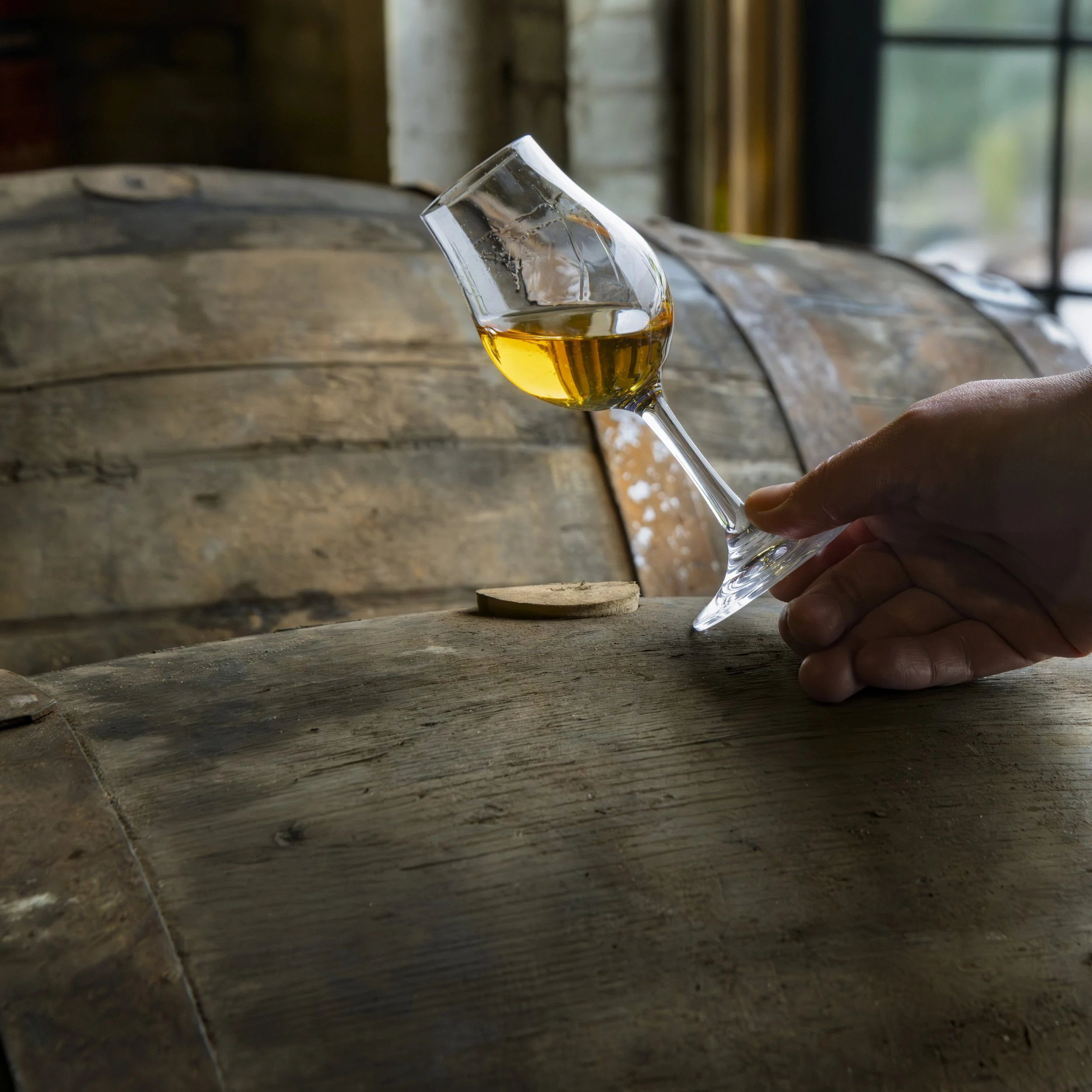
Photo Credit: Christie’s Images Ltd. 2026
Building The Whisky Exchange
Tom: How did The Whisky Exchange come about?
Sukhinder: When my parents decided to retire I already knew what I wanted to do — focus entirely on whisky. I spoke to my brother and suggested we try it for a year. If it worked then great, if not we would get proper jobs.
We initially tried to rent a shop in central London but the rents were terrifying. Then one of my brother’s friends suggested building a website. At the time websites were extremely expensive but he offered to build one for £10,000.
So we decided to take the risk.
We sold my father’s business at the end of 1998 and launched The Whisky Exchange online in early 1999. Within days of going live we received our first order from Germany. Not long after that we started receiving orders from whisky bars in Japan because they had never seen a selection like ours.
Very quickly we had customers across Europe, Japan, the United States and beyond. Shipping regulations were far simpler at the time and the whole world became our market.
When selecting whisky I always looked at it with two different perspectives. One was what makes a truly great drinking whisky. The other was what makes a collectible whisky.
At that time many independent bottlers were still releasing whiskies distilled in the 1960s and early 1970s. For me that was the golden era of whisky. The cask quality was incredible and there was still plenty available.
For example we used to sell a 32-year-old Bowmore distilled in 1966 for about £70 a bottle.
Today that same bottle might sell for £5,000.
Building something of our own
Tom: After selling The Whisky Exchange, what did you want from the next stage of the journey?
Sukhinder: Over the years the business had evolved quite naturally.
We added other spirits because nobody else was really presenting them well. We started The Whisky Show because I’ve always believed the success of whisky comes from letting people taste it. If people can try whisky they understand it — and once they understand it they fall in love with it. We began supplying restaurants, bars and hotels.
We launched The Single Malts of Scotland as an independent bottling brand. Eventually we created Elixir Distillers as a separate company so we could focus more on producing and bottling our own whiskies. When The Whisky Exchange was sold, Elixir was the part I really wanted to keep. It was something I still enjoyed deeply.
At the same time the industry itself was changing. Whisky had become such a success that some larger brands had started to lose a little of their soul. The whiskies I used to love — I want to love them still, because I know how good they once were — but sometimes they’re not quite the same. So we decided to build our own distillery on Islay — Portintruan.
It has been under construction for several years now and we hope to begin distilling properly later this year. And because whisky takes time, we also acquired Tormore in Speyside — a beautiful distillery with wonderful spirit. We’ve been getting to know the distillery, improving the spirit profile, nurturing the stocks. Hopefully we’ll begin releasing whisky from there later this year. The most important lesson whisky teaches you is patience. You cannot rush it.
The industry grew very quickly and everything became about efficiency. For me, efficiency can sometimes be the enemy of quality. Slow distillation matters. Long fermentation matters. That’s where flavour is created.
Karuizawa
Tom: What first struck you when you encountered Karuizawa?
Sukhinder: At the time world whisky wasn’t really a big category. Japanese whisky was known mainly through Suntory and the style was very elegant.
So when I first tried Karuizawa it was quite shocking. I remember thinking, what on earth is this?
These whiskies were incredibly powerful — often more than 60% alcohol even after decades in cask. But they were extraordinary.
Over time I realised what made them so special. The distillery had taken inspiration from Scotland, using Golden Promise barley and focusing on sherry cask maturation. But the real difference was climate.
The warehouses in Japan experience far more humidity. That humidity changes how whisky matures. In some cases the alcohol strength actually increases over time rather than decreasing.
I sometimes describe Karuizawa as Macallan on steroids. You have the fruit and richness of sherry casks but also a deeper spice that gives the whisky a very distinctive character.
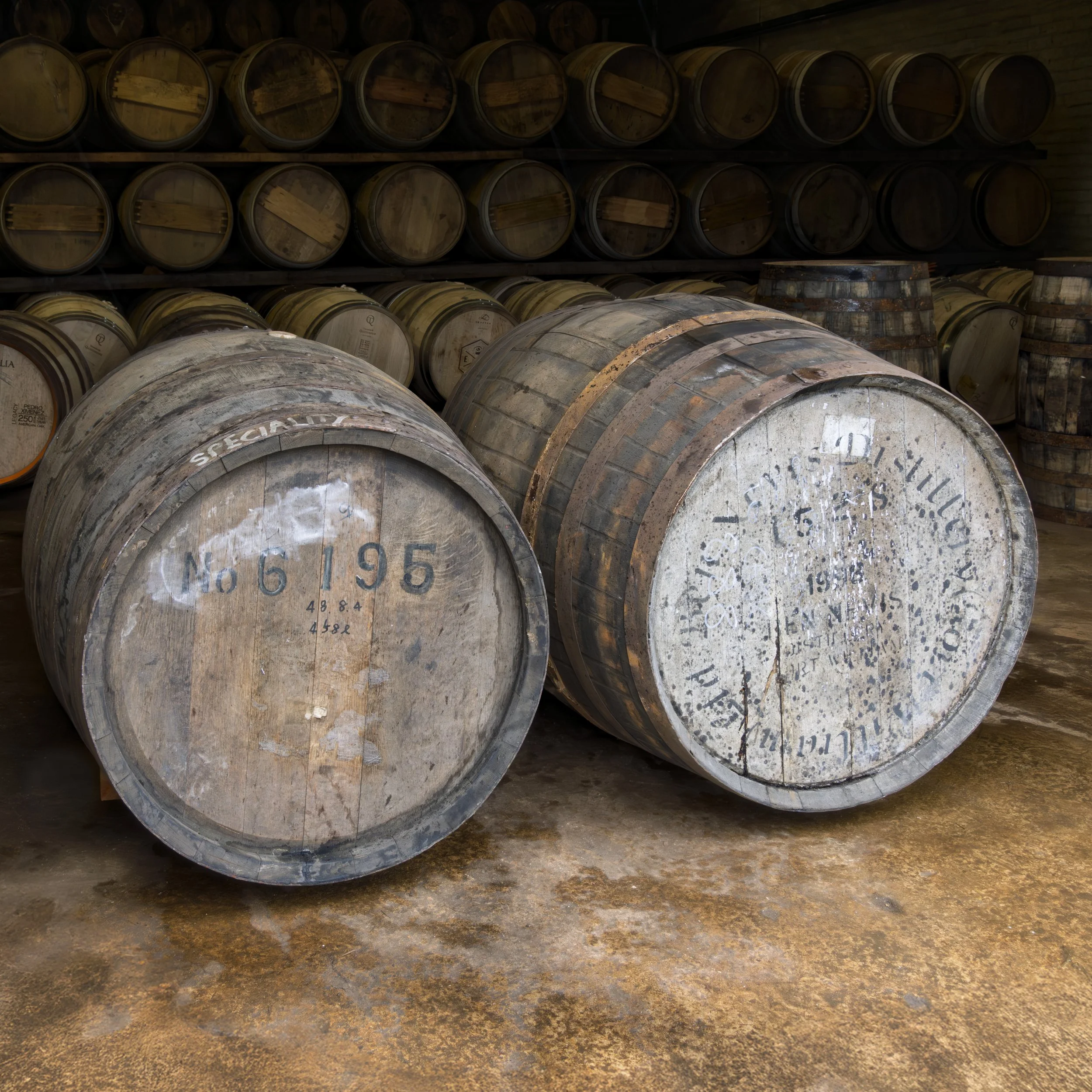
Photo Credit: Christie’s Images Ltd. 2026
The final casks
Tom: For the Christie’s auction, what possibilities does ownership of these casks open up?
Sukhinder: Each cask will produce more than 400 bottles so there are many possibilities. Someone could bottle some now and leave some to mature longer. These are still relatively youthful casks and they have plenty of life left in them.
They could be used for gifting, for corporate collections or for something very special shared with friends or clients. In Asia there is a wonderful culture around gifting rare whisky.
The casks are currently resting at Tormore Distillery and we are happy to continue caring for them for whoever becomes the next custodian.
Ultimately whisky like this is about stewardship. Whoever buys them will be responsible for the next chapter of their story.
And that’s quite a special thing.
Christie’s Auction
To learn more about the sale and the two Karuizawa casks being offered, visit the Christie’s auction page: View Here