Reimagining the London Chop House with Mike Reid
Mike Reid has spent his career in some of the most demanding kitchens in London and abroad, building a style of cooking shaped as much by classical training as by experience. From Le Gavroche and Restaurant Gordon Ramsay to time spent working in Australia, his approach has always been driven by flavour, technique and a clear sense of purpose.
At Liverpool Street Chop House & Tavern, that experience is being applied with a different kind of focus. Opened as a new chapter for The Evolv Collection, the restaurant marks a relaunch of the Chop House as a defining concept within the group — one that looks back to the taverns and dining rooms of 17th- and 18th-century London, while setting out a more contemporary way of thinking about British food and hospitality.
For Reid, that means working with British produce in a way that feels both considered and accessible — building a menu around familiar dishes, while shaping a restaurant people understand, return to, and feel comfortable in.
Tom Owtram, Editor of Between the Vines, sat down with Reid to reflect on the path that brought him here, the realities of building a restaurant today, and how ideas around clarity, sourcing and accessibility are shaping a modern interpretation of the London Chop House.
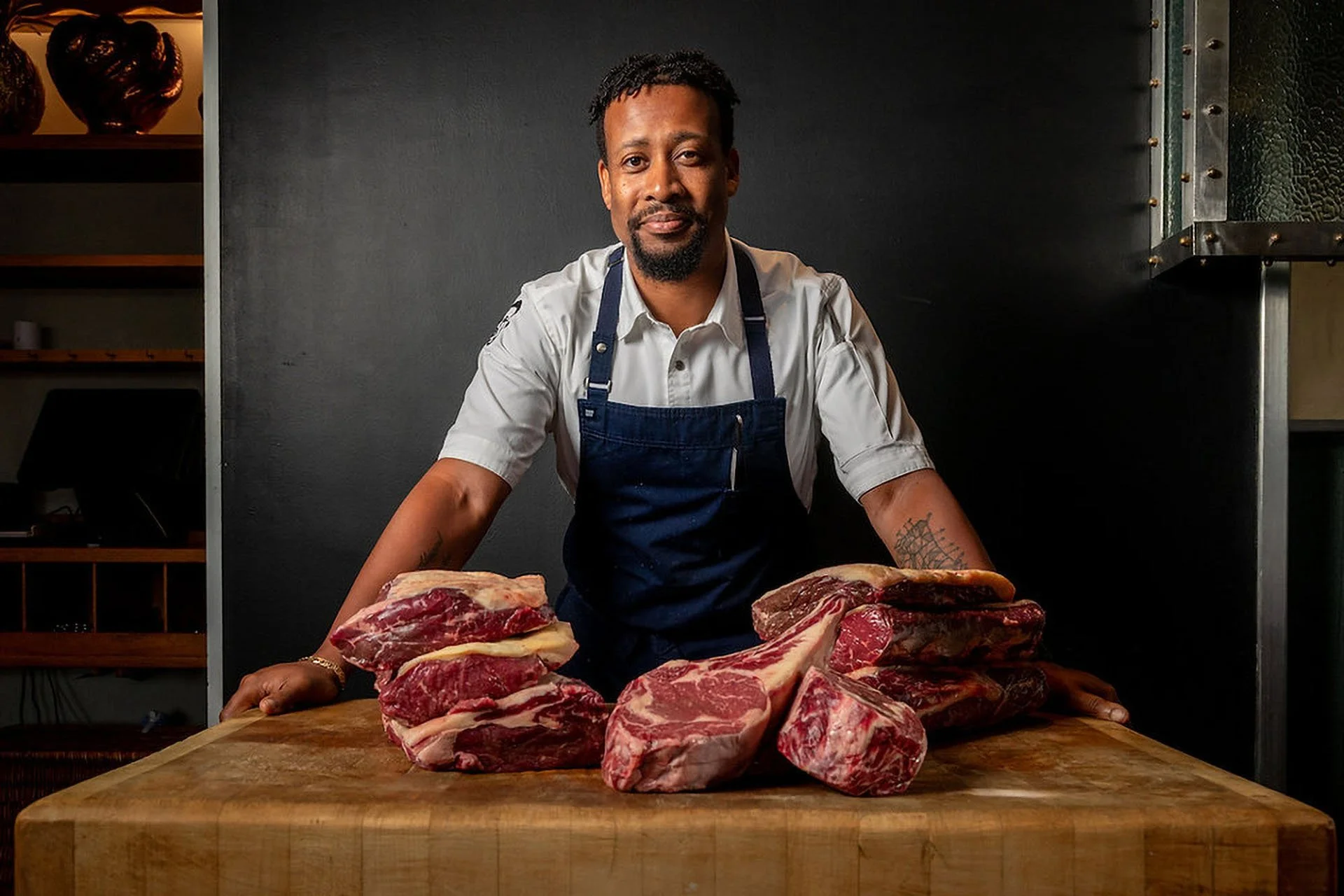
Photo Credit: The Evolv Collection
Let’s start at the beginning. What are your earliest memories of food, and what role did it play growing up?
Food was my mum’s love language. That’s how she showed care. We weren’t particularly tactile as a family — we didn’t go around saying “I love you” all the time — but I always knew it through food. If I’d had a bad day, she’d make one of my favourite meals, or there’d be something waiting for me the next morning. That was her way of saying, “I’ve got you.”
So from a very young age, I associated food with comfort and connection. I was obsessed with it. I loved eating, loved flavours — roasts, gravy, sauces. I was that kid at school who would swap his packed lunch and go and make something else in the canteen. Even my teachers knew — they’d keep little bits of cheese for me instead of sweets because they knew I’d choose that every time.
I was always in the kitchen. My mum tolerated it more than enjoyed it, but baking together was her thing and I loved it. Looking back, food was just always at the centre of things for me.
When did it shift from something you loved into something you wanted to pursue seriously?
Probably around fourteen or fifteen. When we started doing food tech at school, I loved it. That was the first time I thought, this is what I want to do.
My parents didn’t love that idea. They worked incredibly hard and wanted us to have more options, more stability. So for them, becoming a chef looked like choosing a tough life. They wanted me to finish school, go to university, follow a more traditional path.
I did go to university — business and marketing — but I never loved it. Then I ran out of money, needed a job, and ended up working in a kitchen in Portsmouth. From the moment I walked in, that was it. The intensity, the energy, the food — I just knew. I started picking up more and more shifts and going to fewer lectures. It became very clear, very quickly, that this was what I was meant to do.
What were those early kitchen years like for you?
Hard. Really hard.
I came into it slightly later than some others, so I had to work twice as hard just to catch up. The kitchens I trained in were tough environments. You weren’t built up — you were knocked down, and the idea was that you either got stronger or you didn’t last.
I remember being told early on that I wasn’t good enough to work in a McDonald’s, let alone in a proper kitchen. That was just the culture at the time. It was about resilience. You had to prove yourself.
But it also gave me a mindset. I remember being told I didn’t get an opinion as an apprentice, and thinking, fine — I’ll get good quickly so I can have one. That became a bit of a mantra.
Beyond the intensity, what did you take from those kitchens that has stayed with you?
The importance of foundations. No shortcuts.
At Restaurant Gordon Ramsay, for example, I spent months just making stocks before I was allowed anywhere near the sauces. Learning how to roast bones properly, skim, build flavour, manage yield — all of it. It sounds simple, but it’s not. It’s a craft.
To this day, I’m obsessive about that kind of thing. I won’t buy in stocks. I don’t think you can replicate the depth of flavour. And more than that, it’s a skill that shouldn’t be lost.
I do think some of that has changed. A lot more comes pre-prepared now. Younger chefs don’t always get the same grounding — working with whole animals, breaking down fish, building sauces from scratch. That education was everything for me.
Were there people along the way who really shaped how you think about food?
Yes — one in particular, a chef called Dan Wallace. He became both a mentor and one of my closest friends. We worked together on and off for years.
We’d travel together, eat in some of the best restaurants in the world, push each other constantly. We saved up to go to places like The Fat Duck, El Bulli, Noma — that was our version of a holiday.
He taught me a huge amount, not just technically, but in how to think about food, how to stay curious, how to keep learning. I’ve got enormous respect for him.
You’ve spent time working in Australia as well. How did that change your perspective?
Australia had a big impact. The standard of cooking there is incredibly high, especially in Melbourne, but what really influenced me was the proximity to Asia.
I spent a lot of time learning about Asian cuisines, travelling, understanding ingredients — miso, shio koji, soy, mirin, sake — and how to use them properly. That changed the way I think about flavour.
It broadened everything. Not necessarily for Chop House, but in my cooking more generally. And there’s a real culture of independent, chef-led restaurants there, which is inspiring. It’s less about big groups, more about individual voices.
Coming to Chop House & Tavern — how did that opportunity come about?
I’d known Martin Williams for years, and we’d worked together before. When he first mentioned the project, I wasn’t immediately convinced. At that point, my cooking had a lot of Asian influence, and this didn’t feel like an obvious fit.
Then he introduced me to Ron Cregan, who’s a brand historian. We had a long conversation about the history of chop houses, Victorian dining, how British cuisine evolved. That’s what changed it for me.
It stopped being just a concept and became something with depth. Something we could build properly — from the food to the design to the language of the place. That’s what got me interested.
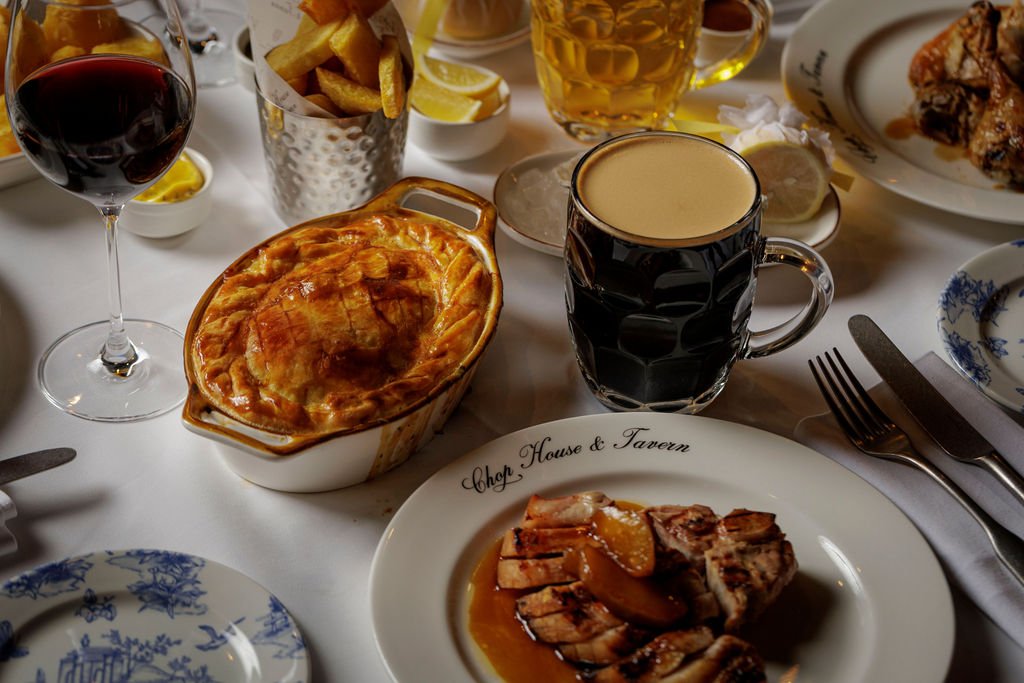
Photo Credit: The Evolv Collection
What drew you to working with British food in that way?
It felt real. It wasn’t about chasing a trend.
There’s a lot of emotion in British food when it’s done properly. You see it all the time — people eat something like a suet pudding or a trifle and it takes them straight back to something personal. A memory, a person, a moment.
That’s powerful. And I liked the idea of doing that honestly, without overworking it or trying to modernise it for the sake of it.
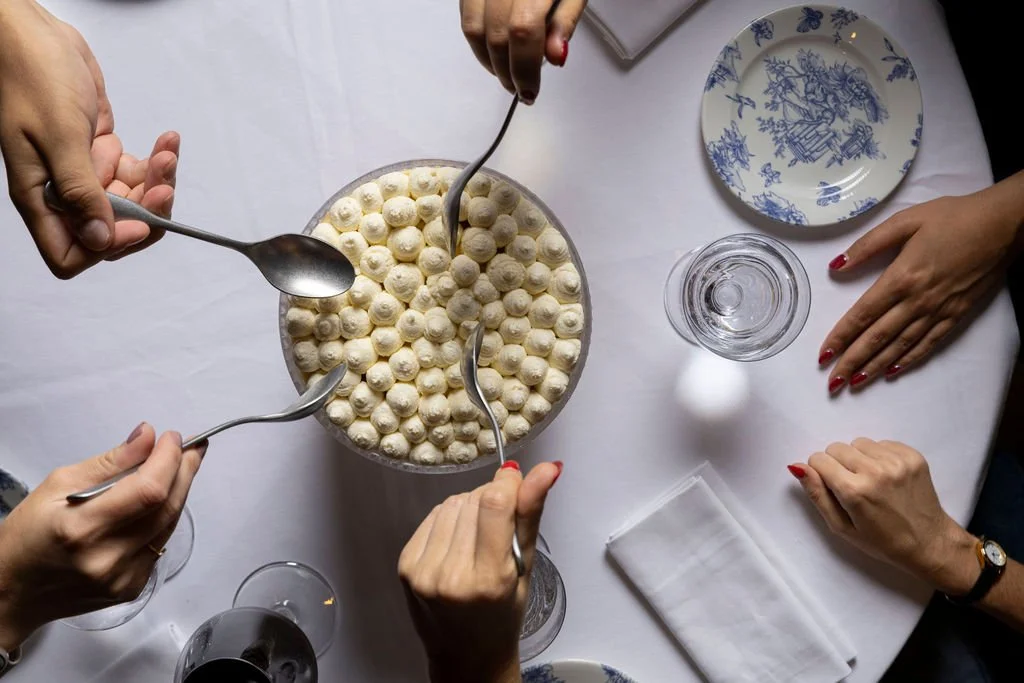
Photo Credit: Clementine Communications
When you’re building a menu like that, what are you trying to achieve?
Clarity, first and foremost.
Everything has to make sense within the world of the restaurant. Why this dish? Why this cut? Why this drink? If it doesn’t fit, it doesn’t stay.
And beyond that, it has to be delicious. That sounds obvious, but it matters. People need to want to come back and eat it again.
Sourcing and provenance feel central to the project. How do you think about that?
It’s fundamental. It’s always been part of how I cook, but for this project it was even more important.
I wanted it to be properly British — working with farmers, understanding where things come from, using the whole animal. Not just taking the premium cuts.
If someone has raised an animal well, I’ll take everything — the shin, the cheeks, the tongue. That’s where the flavour is, and it’s a more responsible way of working.
For me, it’s about respect — for the product and for the people producing it.
Do you see part of your role as educating people — both your team and your guests?
Yes, absolutely.
That’s been a big part of what I’ve wanted to do over the last decade. Share knowledge. Help people understand that there are other ways to cook and eat.
You can do that through the menu, through the way staff talk to guests, through TV, social media — whatever platform you have. If you know something that’s valuable, pass it on.
We’ve drifted a long way from understanding food properly. We need to reconnect with it — how it’s produced, how it should be consumed.
There’s a lot of pressure on hospitality right now. How do you see the industry evolving?
It’s tough. There’s no getting around that.
But I think one of the biggest things we need to look at is accessibility. What are we offering people, and does it feel worth it?
If someone walks into a restaurant and the cheapest bottle of wine is £90, you’re immediately shutting people out. There are incredible wines at more accessible prices — you just have to choose to include them.
It’s about giving people options. They should be able to come in and spend £30 or £200 — both should feel possible. That’s how you keep people coming through the door.
And finally, for someone starting out now — what would you want them to understand?
That it’s hard work, and there are no shortcuts if you want to get good.
Learn the foundations properly. Stay curious. Ask why.
But also understand that cooking today is bigger than just the kitchen. You need to think about producers, sustainability, the economics of a restaurant, how people actually want to eat.
And most importantly — hold on to the love of food. That’s the reason for doing any of it.