From Hitchcock to Ciliegiolo: The Unlikely Story of Sassotondo
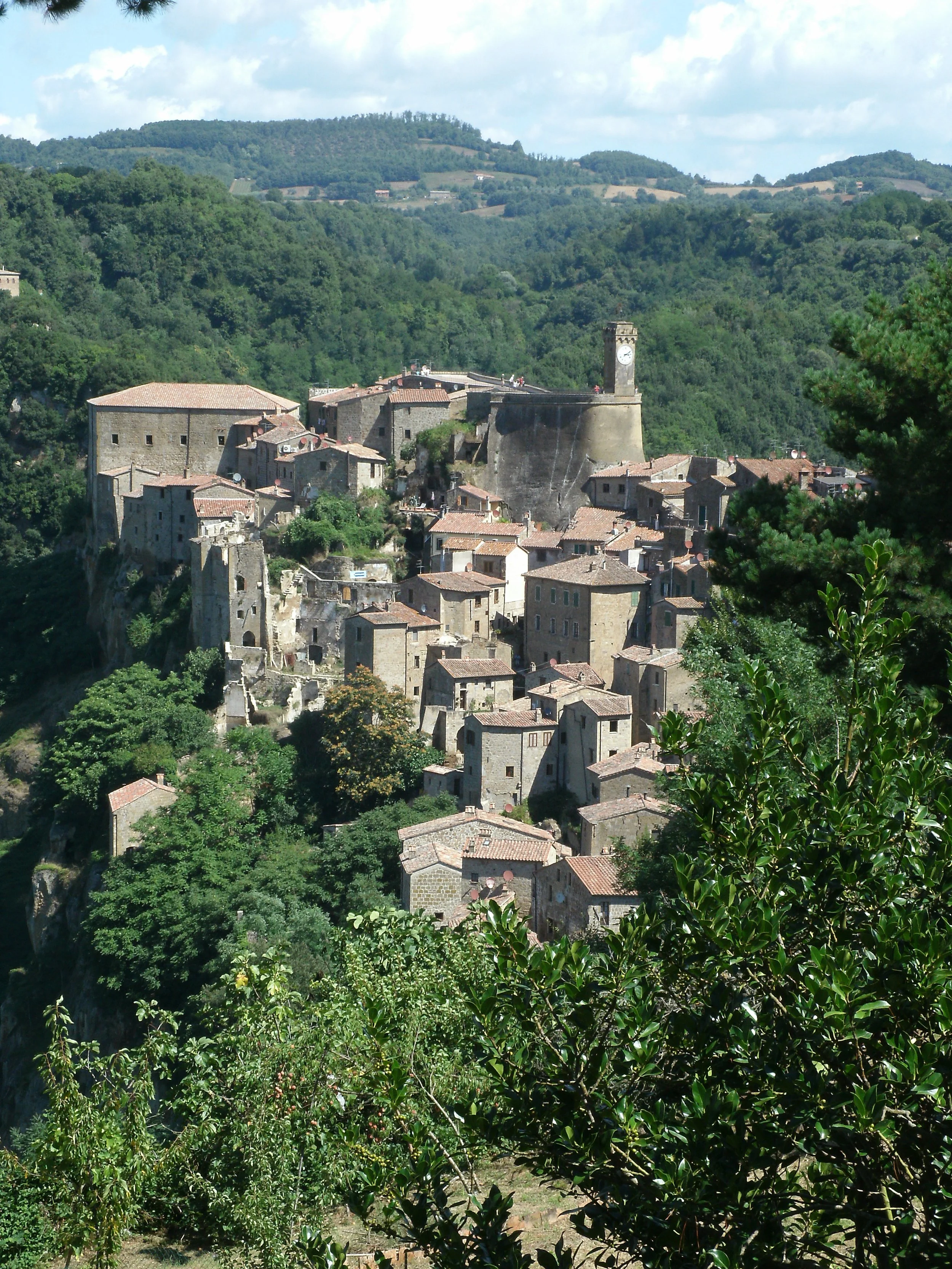
In the volcanic landscapes of southern Maremma, where ancient towns rise dramatically from cliffs of tuff stone and deep canyons cut through the earth, Sassotondo feels slightly apart from the better-known image of modern Tuscany.
The story of the estate reads almost like the opening scene of a film.
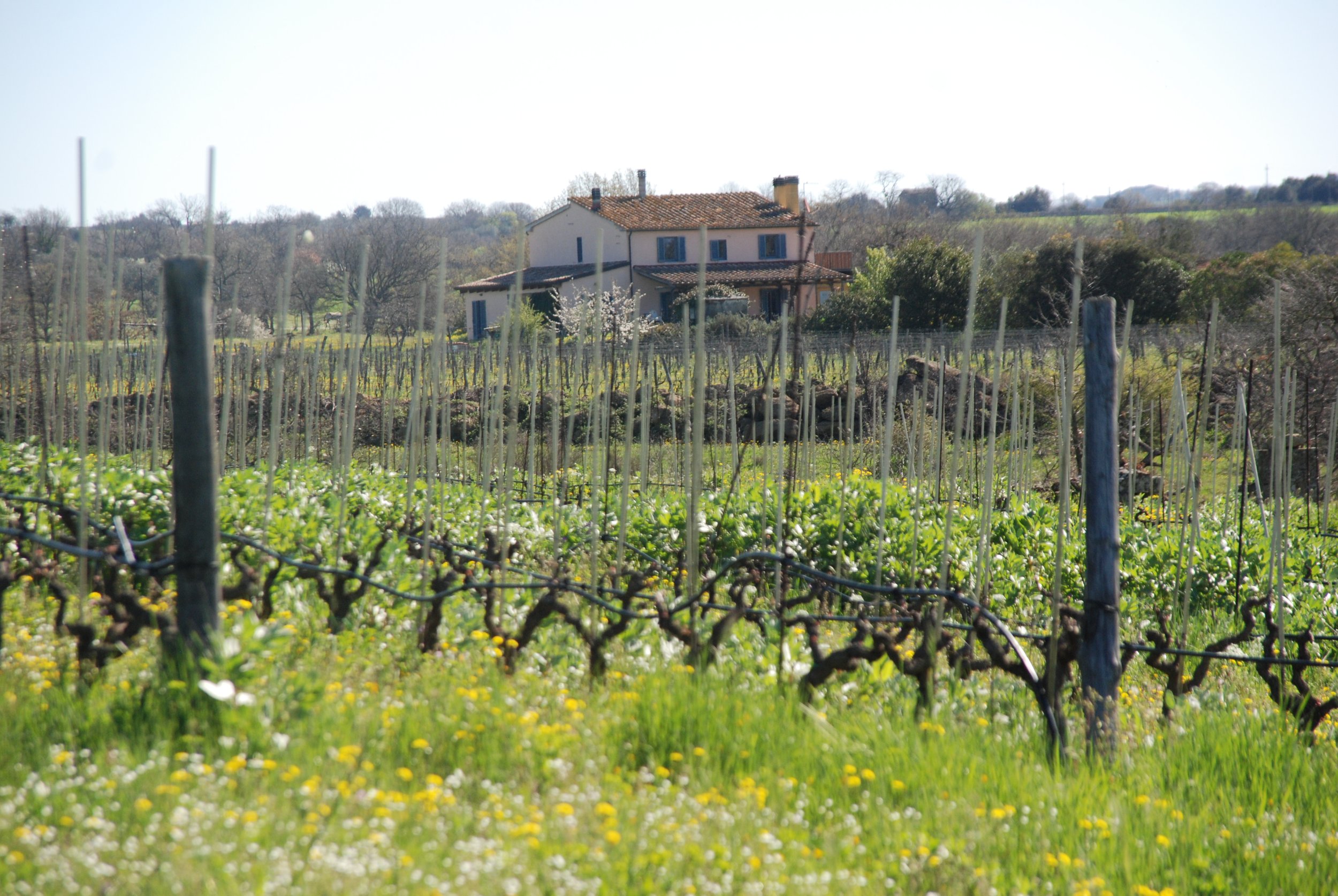
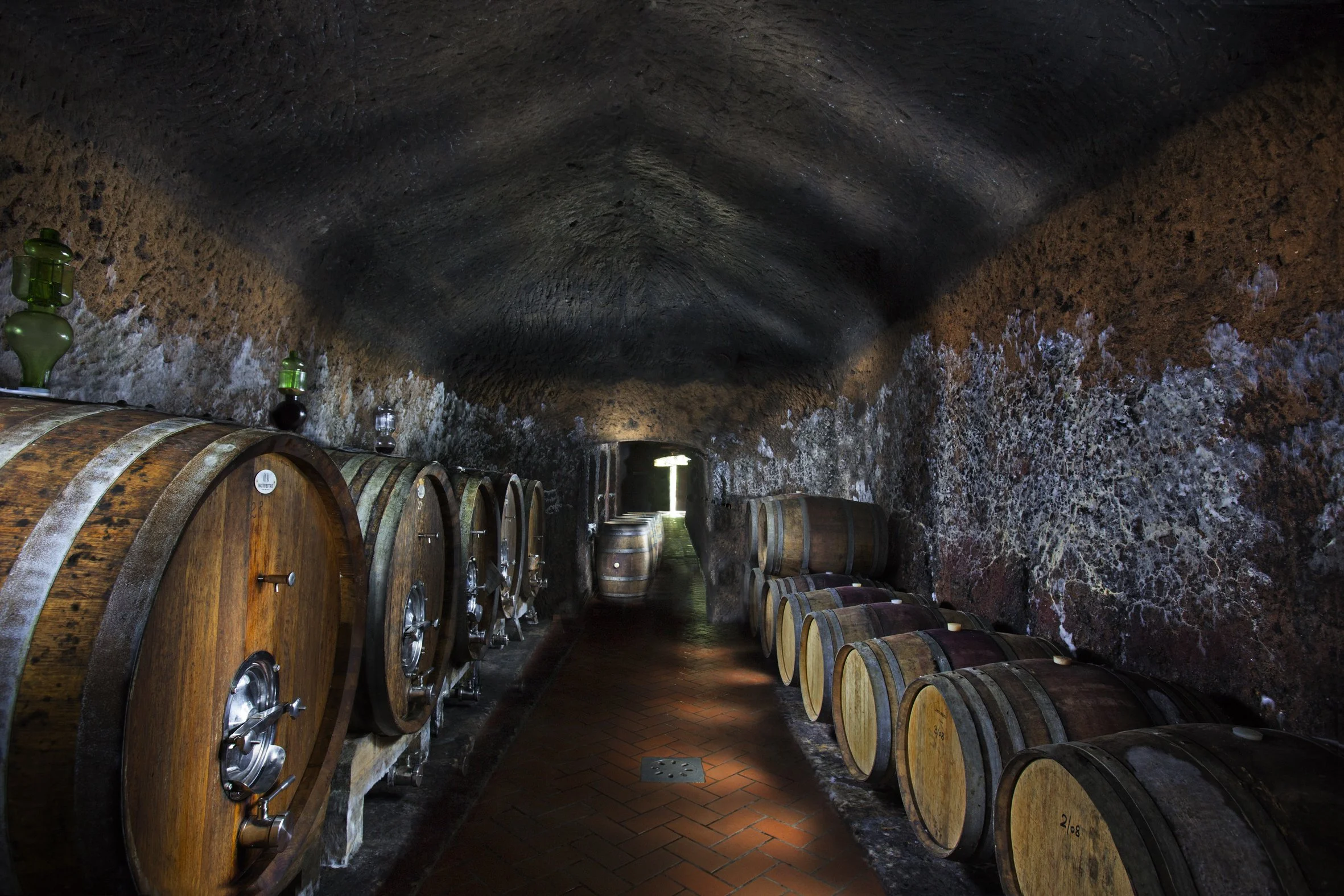
Carla Benini, an agronomist from Trentino, and Edoardo Ventimiglia, a documentary filmmaker from Rome, arrived in Sovana in 1990 to find a hectare of abandoned vines, a crumbling farmhouse and a cellar carved deep into volcanic rock. What began as a search for peace outside Rome gradually evolved into one of Italy’s most distinctive voices for Ciliegiolo.
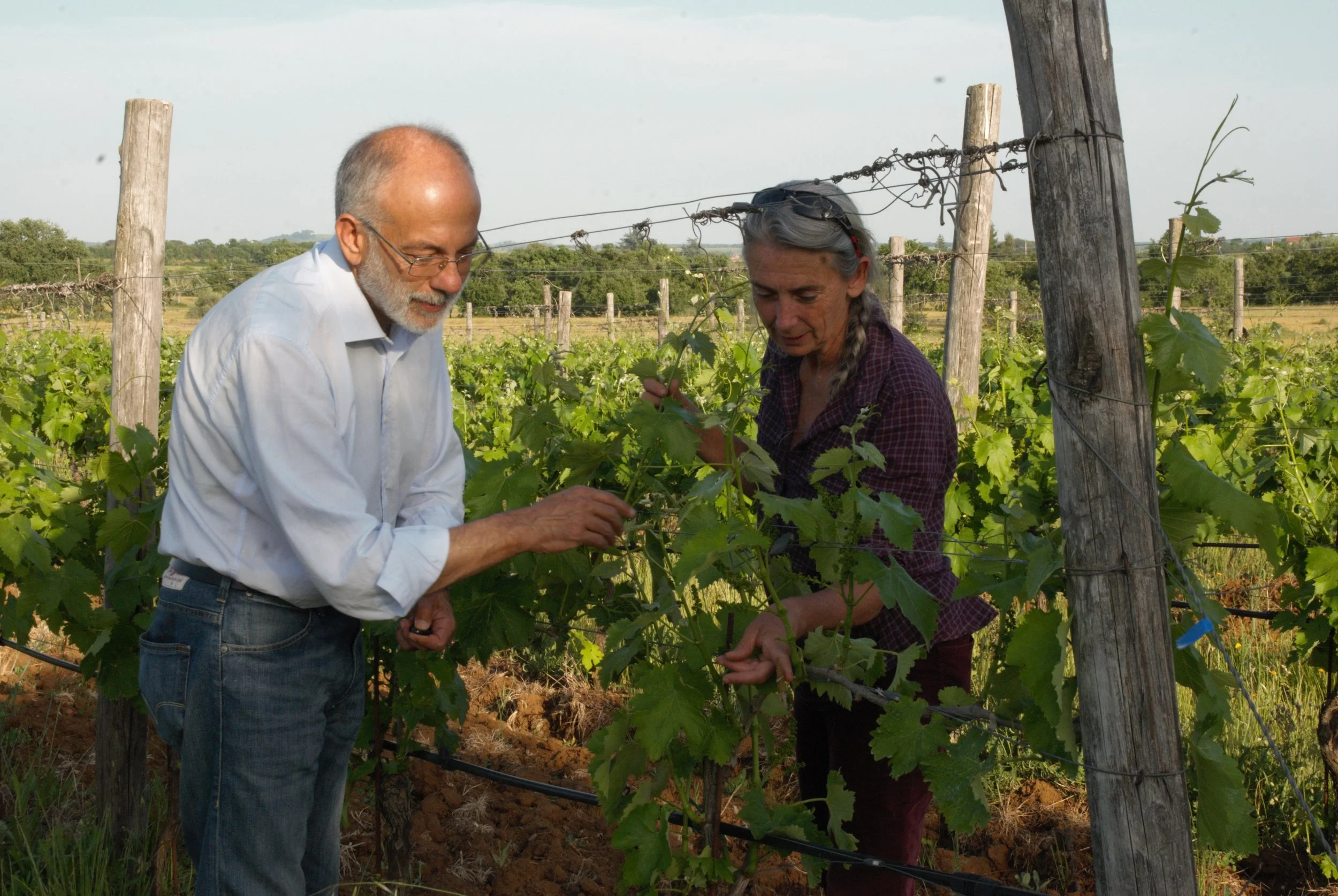
Cinema still lingers in the background of Sassotondo. Edoardo’s grandfather, Gaetano Ventimiglia, worked closely with Alfred Hitchcock during the silent film era, while his father later developed an award-winning camera system recognised with the A.T.I.C Prize for Technical Innovation in 1970. That same sense of craftsmanship and technical precision now finds expression in the cellar, where Carla and Edoardo have spent more than three decades shaping wines defined by volcanic soils, biodiversity and an uncompromising approach to farming.
Speaking with Tom Owtram, Editor of Between the Vines, Carla and Edoardo reflect on the origins of Sassotondo, the rise of Ciliegiolo and the philosophy that continues to guide the estate today.
Q: Before Sassotondo, you and Edoardo were working in very different fields. What did that period of your life look like?
Edoardo: I was working in the film industry in Rome — a busy period, exciting but very stressful. Carla worked as an agronomist at a consulting firm serving the agri-food industry. We were living in Rome, a difficult city for a family where both parents worked, and we often went looking for a bit of peace outside the city.
Q: Do you remember your first encounter with Sovana and the surrounding landscape? What struck you about it?
Edoardo: My first encounter with the area was many years ago, before I met Carla. I travelled here through the heart of the Maremma from a house I had by the sea, and was struck by a landscape unlike the region’s familiar rolling hills. Instead, there were towns such as Pitigliano and Sorano, which seemed to rise directly from the rock itself, alongside dramatic canyons carved into the stone by rivers.
Carla: I too used to go to the sea as a child, with my mother, who would take us to a campsite at Giannella. When the weather turned bad, she would ask people if there was anything worth seeing inland, and everyone would say: “Oh, there’s nothing there.” But one day we decided to explore the area for ourselves and discovered villages that looked like they’d come straight out of the Middle Ages — women sitting on doorsteps dressed in black, spinning — and those canyons Edoardo talks about, places with a magical atmosphere that stay with you forever.
Edoardo: The first impression of the area Carla and I had together was when, almost on a whim, we came across this piece of land. We had just returned from a trip to Scotland, and this place felt like a Scottish moor to us: a white horse trotting across the meadow and a crumbling farmhouse at the far end.
Q: When you arrived in Sovana, how did you begin establishing the vineyards, and what guided those early decisions?
Edoardo: When we arrived, we weren’t yet thinking about producing wine. Carla, as an agronomist, was thinking of running a farm; I mostly just wanted a lovely place to spend weekends in the countryside. Gradually, though, we both became passionate about wine. The first thing we did together was a sommelier course in Rome.
We also had a family friend, Gianvittorio Baldi — a director and owner of an established winery in Emilia-Romagna — who first introduced us to the agronomist Remigio Bordini, and then to the winemaker Attilio Pagli.
When we started, there was only half a hectare of vines on the property, so to give the estate some economic viability we began planting following the DOC regulations then in place: the Bianco di Pitigliano and the Sovana DOC for reds, which called primarily for Sangiovese. Then in 1991 we purchased the San Lorenzo vineyard, planted almost entirely with Ciliegiolo, a grape that at the time was not recognised by any of the local DOC designations.
Q: When did you first sense that Ciliegiolo could express something distinctive here?
Edoardo: In 1997 our winemaker Attilio Pagli helped us discover the true potential of Ciliegiolo. After tasting the grapes from the San Lorenzo vineyard, he said they had everything needed to produce an exceptional Ciliegiolo — one that could fully express the spiced, elegant, age-worthy character of this volcanic territory. That was the beginning of the project.
Q: Has your understanding of Ciliegiolo changed over the years?
Carla Benini: We have been exploring the potential of Ciliegiolo through different vinification techniques and different ageing methods, and in every trial the variety has consistently delivered excellent results.
At the same time, climate change has altered the nature of Ciliegiolo — particularly its acidity structure — and pushed us toward less oxidative forms of ageing: we moved away from small oak and toward large barrels.
Ciliegiolo has nonetheless adapted very well to climate change. In the very hot summers of recent years it does not stop ripening, and when cooler temperatures and rain return at the end of summer it manages to soften the effects of the excess heat, producing well-balanced grapes for elegant, full-bodied wines.
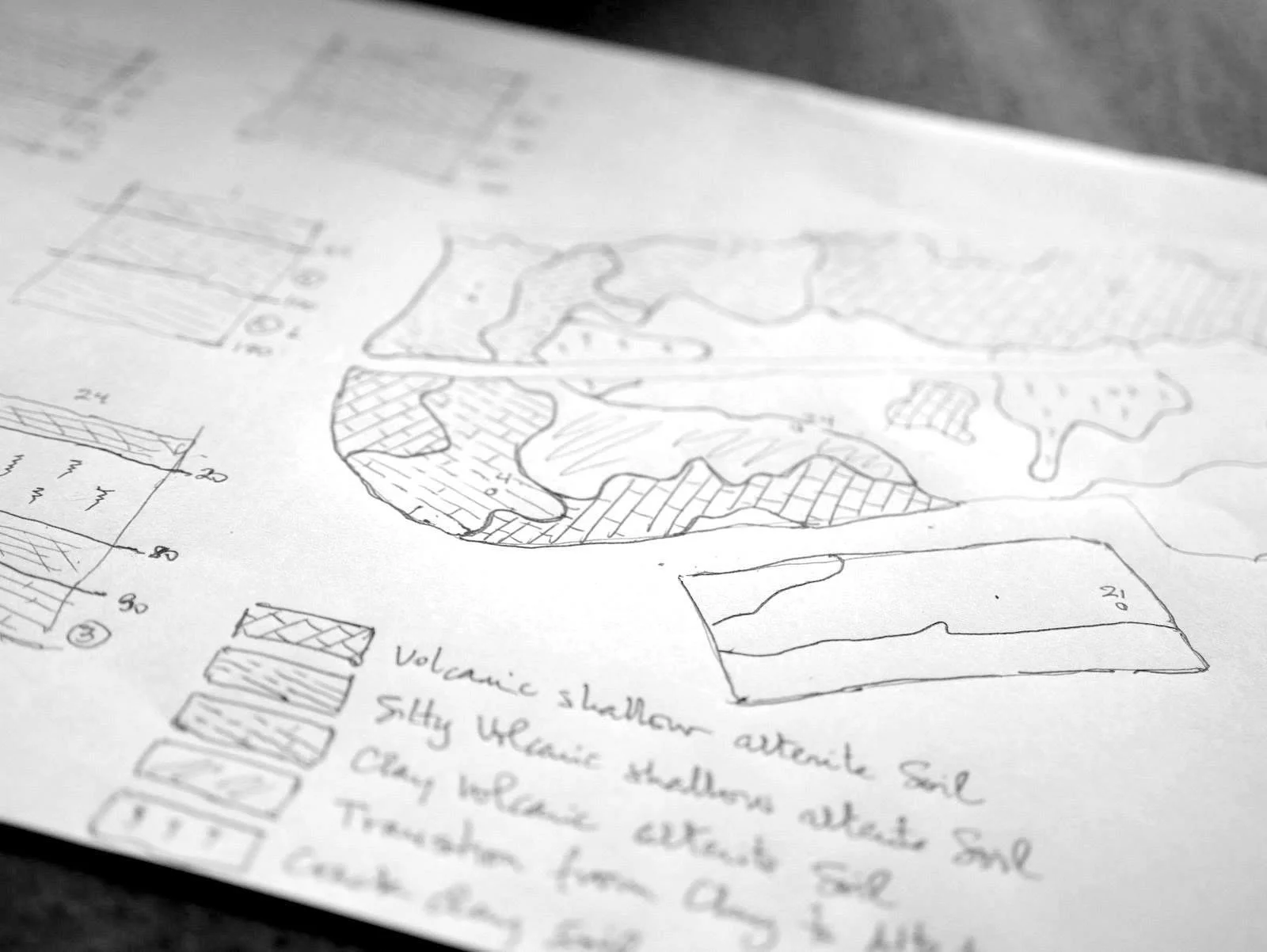
Q: What do the tufo soils give to your wines that you feel couldn’t come from elsewhere?
CB: Volcanic tuff gives the wine freshness, elegance and longevity. It is well established that volcanic soils produce wines with a perception of acidity and salinity that exceeds what the analytical data alone would suggest. These young central Italian volcanoes in particular give wines a strong spice character alongside the acidity and freshness that keeps them vibrant and never flat.
Q: How would you describe your approach to farming today?
CB: From the very beginning, our estate has never used chemical products. We also went through a biodynamic phase, and we have been certified organic since 1994 — driven by our deep love for the land and by the conviction that only healthy soils and contented vines can produce good wines.
In recent years we have come to realise that all these efforts have produced environments of extraordinary ecological complexity, both in the vineyard and in the cellar — and for that reason, very stable ones. Our aim today is to maintain these conditions.
Our approach to farming, beyond being certified organic, can be summed up by a term found in scientific literature: homeostasis.
Q: Beyond the vines themselves, what role does biodiversity play in the estate?
CB: The pursuit and maintenance of biodiversity is our guiding principle in our relationship with this land.
At a macroscopic level, diversity is visible in what we cultivate: pastures, olive groves and vineyards — all spread across a large area — and we deliberately avoid the intensive approach that is sometimes typical of viticulture. Some vineyards have recently been planted within the olive grove.
At a microscopic level, this biodiversity is evident in the botanical composition of the meadows and vineyards — where you can find ten different varieties of clover in a single square metre — and in the cellar, which harbours in its cool, damp interior an extraordinarily varied and complex microbial and fungal flora that we are now beginning to explore from a scientific perspective.
Biodiversity in our estate therefore serves a dual purpose: on the one hand it protects, on the other it defines character. Both are essential for a small organic producer like ours, whose strengths lie in caring for the land and in pursuing a genuine originality in its wines.
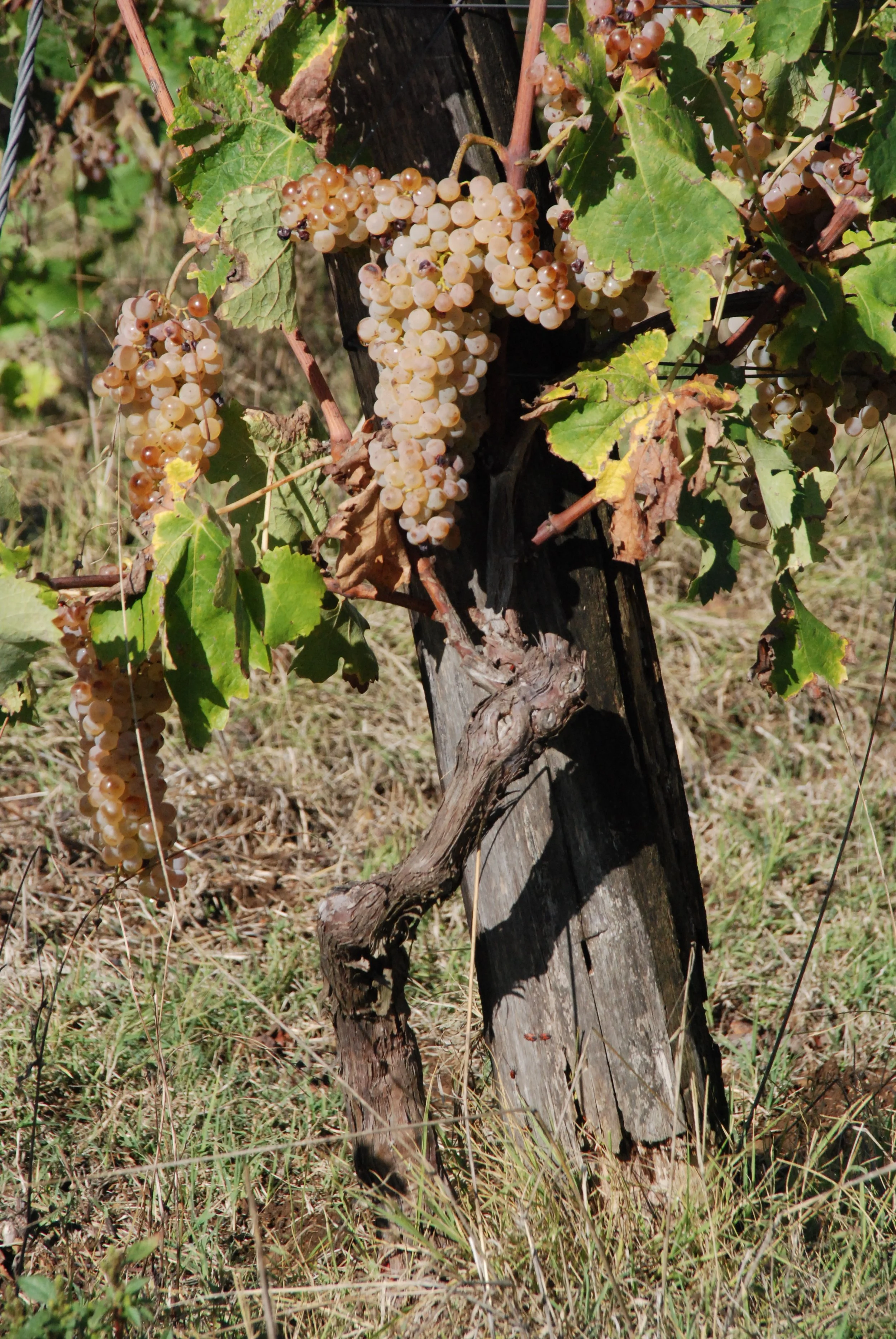
Q: Working with older vines often requires more time and attention. What do they give you that younger vineyards cannot?
CB: Working with old vines can be a little frustrating at times, not so much because of any practical difficulty but because of the very low yields. That said, it leads to wines of far superior quality — deeper, more balanced, and generally reliable even in vintages that might have stressed younger vines. Old vines give the wines greater balance and depth, and hold up better in conditions of climatic extremes.
Q: When you taste your wines, what are you looking for?
CB: When I taste my wines, what matters most to me is finding the characteristic signature of Sassotondo: freshness, spice, minerality. But also, more broadly, a sense of authenticity and craftsmanship. Wines that are too perfect irritate me.
Q: Is there a wine that feels closest to what Sassotondo represents today?
CB: The Sassotondo Rosso, with its spice and its joyful personality, is in my view the wine that best represents Sassotondo — alongside the San Lorenzo. For the whites, the Isolina.
Q: Living and working in this part of Maremma, how has the surrounding culture influenced you?
EV: Neither Carla nor I are from this part of Italy. This area of Tuscany has a strong character — ironic, blunt, hard to win over. But we are stubborn too, and in the end we won our battle to bring Ciliegiolo the recognition it deserves.
In other respects, this is a zone well on the margins of the Tuscany better known to tourists, and viticulture here has never had adequate technical infrastructure behind it. You learn to make do, and that stimulates creativity and leads to unconventional ideas.
Q: When people visit Sassotondo, what do you hope they experience?
CB: My hope is always that when people arrive here they see the wonder of a pure and unspoilt landscape, and feel the sense of space and freedom this place gives.
The encounter with our wines is also meant to give them a sense of something slightly outside the norm — that same idea of freedom and space, and the joy of feeling part of a creative project that begins in the vineyards and ends in the bottle, passing through the coolness of our beautiful cellar carved into the tuff.
Q: How has working alongside your daughter Francesca shaped the way you think about the future of the estate?
CB: This year I worked closely with Francesca, both during the harvest and on a promotional trip to London. For now, her approach towards me is very respectful — she is still in the process of observing and learning.
She clearly has a deep love for this place. It is her home, and it is her parents’ life’s work. But I have always believed that farming must be a conscious choice; it cannot simply be something you inherit. You have to choose it for yourself, because without that freedom of choice, it can easily become a source of regret.
Still, I believe the future will be in good hands. Much will depend on our ability to navigate this difficult period for the industry and pass on an estate that remains strong and healthy, as it is today.
Q: Looking ahead, what feels most important to protect in the vineyard and in the way you work?
CB: The climate is changing, and the market with its siren calls offers simple solutions to problems it has helped to create. I hope to be able to resist these alluring promises of easy fixes — genetically modified varieties, miraculous chemical products — because what matters most to me to protect is an idea of a peaceful and collaborative relationship with nature.