Tom Owtram, editor of Between the Vines, met Alberto Moretti Cuseri (Pictured Left in the Image below) in Chelsea on a bright spring morning. Over coffee, the conversation danced between Tuscany, family history, farming and the changing realities of making wine today.
Moretti Cuseri’s family has owned Tenuta Sette Ponti since the 1950s, and much of the discussion centred on how the estate has evolved over time — from organic farming to changing attitudes around oak, sustainability and vineyard management. Speaking to The Journal at Between the Vines, he reflects on why patience remains one of the most important parts of the process.
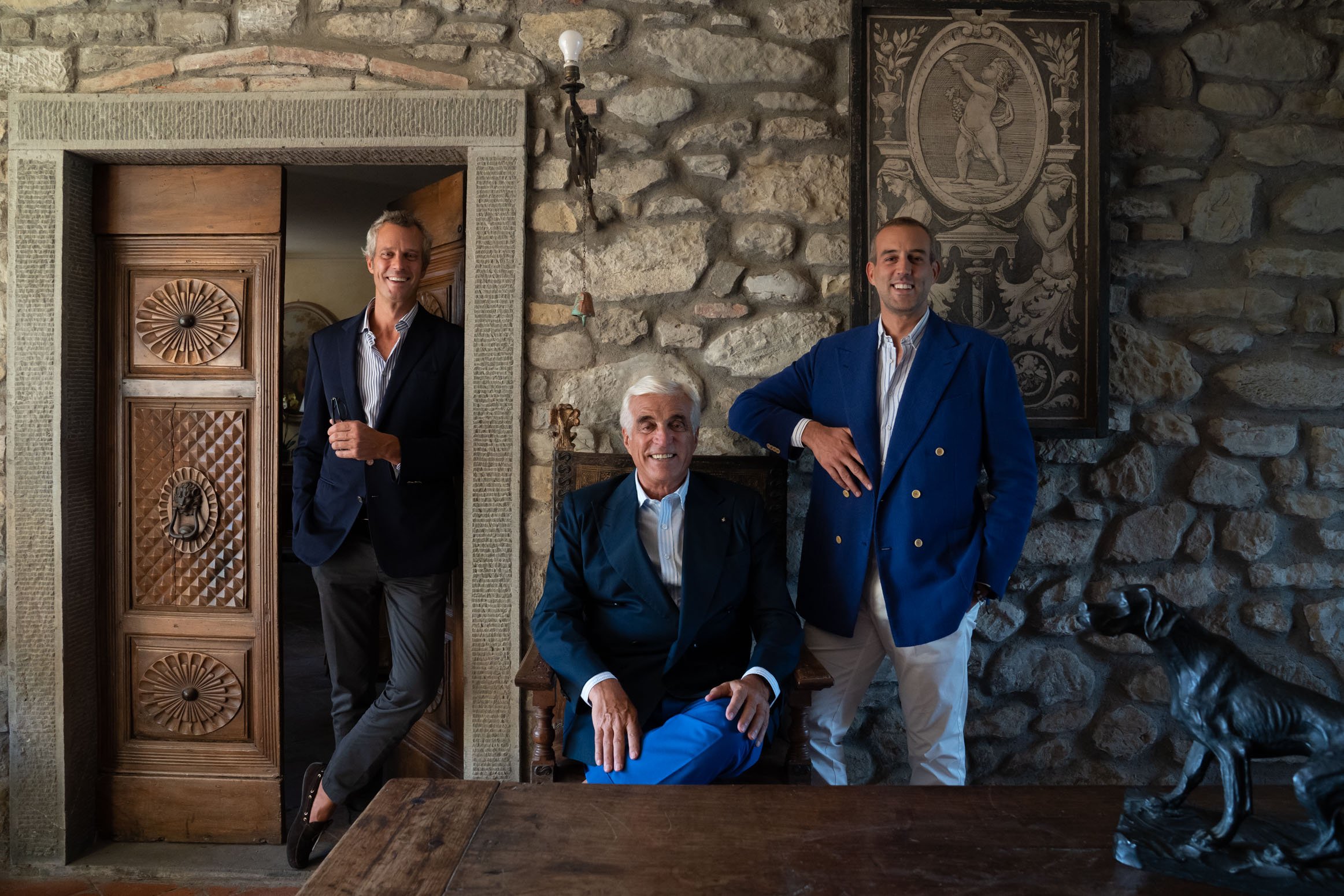
Alberto Moretti Cuseri (left)
Q: Alberto, can you take us back to the roots of the estate and your family’s story?
The story starts in the early 1950s, when our grandfather bought the property in Valdarno di Sopra, about fifty minutes south of Florence. It had belonged to the royal family, and we still have vines planted there in 1935.
He came there out of passion — for the countryside, for food, and for wine. It wasn’t a business in the beginning. That came later.
In the late 1980s, our father really started to focus on wine. He had this idea of holding two things together: Sangiovese and tradition on one side, and on the other, the possibility of doing something more international.
“If you want a strong identity in wine, it has to come from your place.”
Q: How important were those older vines in shaping the direction of the estate?
Very important.
If you want a strong identity in wine, it has to come from your place.
Old vines give you something you cannot recreate. They are already adapted, already part of the land. Even if it is the same grape, it behaves differently.
For us, that connection to the past is also what allows us to build something for the future.
“Old vines give you something you cannot recreate. They are already adapted, already part of the land.”
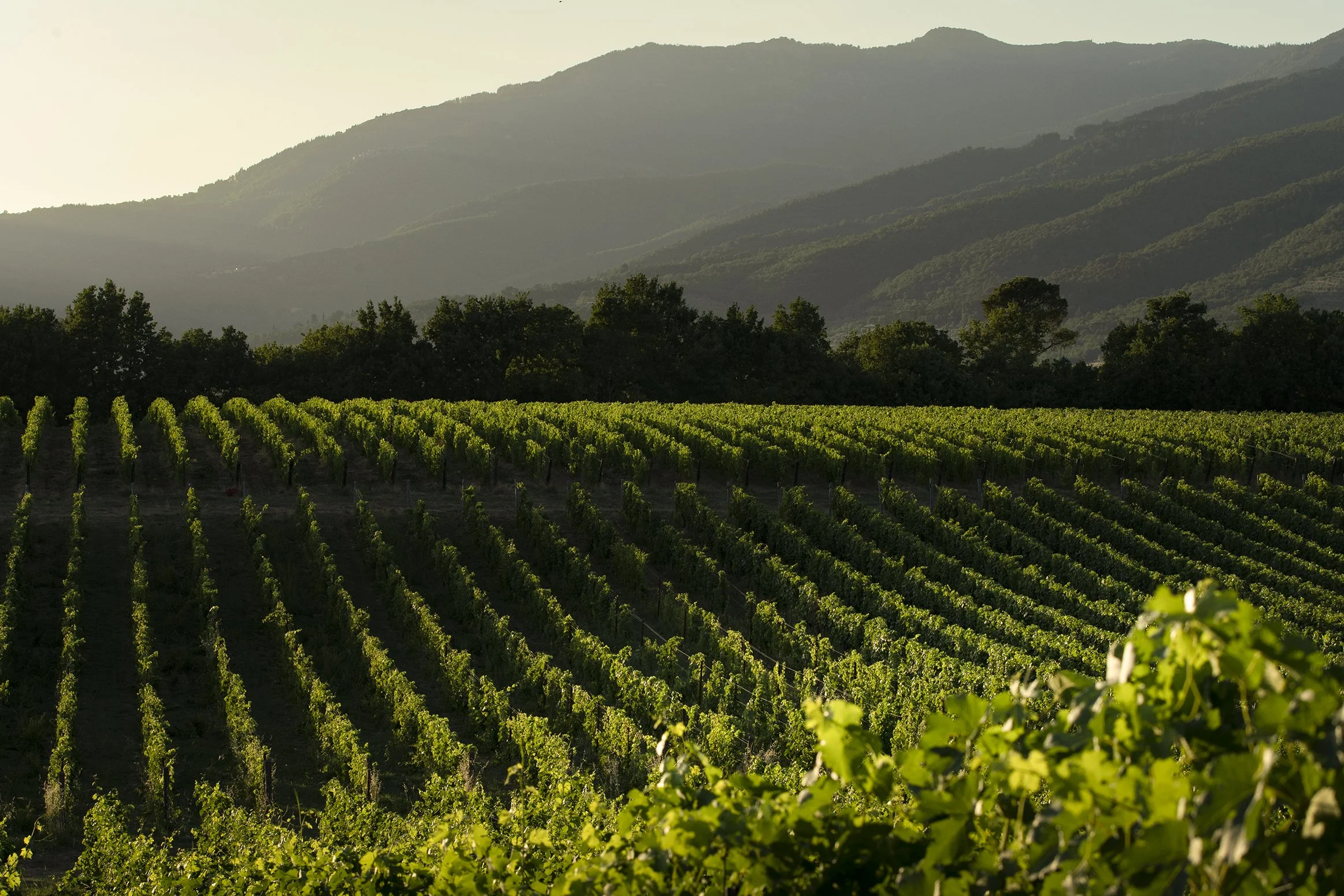
Q: Introducing international varieties into Tuscany must have felt like a significant step at the time. How did you approach that evolution?
It was something that was already happening in Tuscany, but it was still new enough that you had to understand it properly.
You cannot just plant Merlot or Cabernet and expect it to work everywhere. In some places it is perfect, in others it is not. So there was a lot of experimentation — trying, observing and adjusting.
That process never really stops.
Q: When you think about consistency in wine over time, where does that come from?
More and more, from the vineyard.
At the beginning, like many producers, we were very focused on what we could do in the cellar. But over time, you realise everything starts outside.
The move towards organic farming was part of that. It changes your perspective. It’s not something that gives you immediate results, but over time it makes a difference.
“Over time, you realise everything starts outside.”
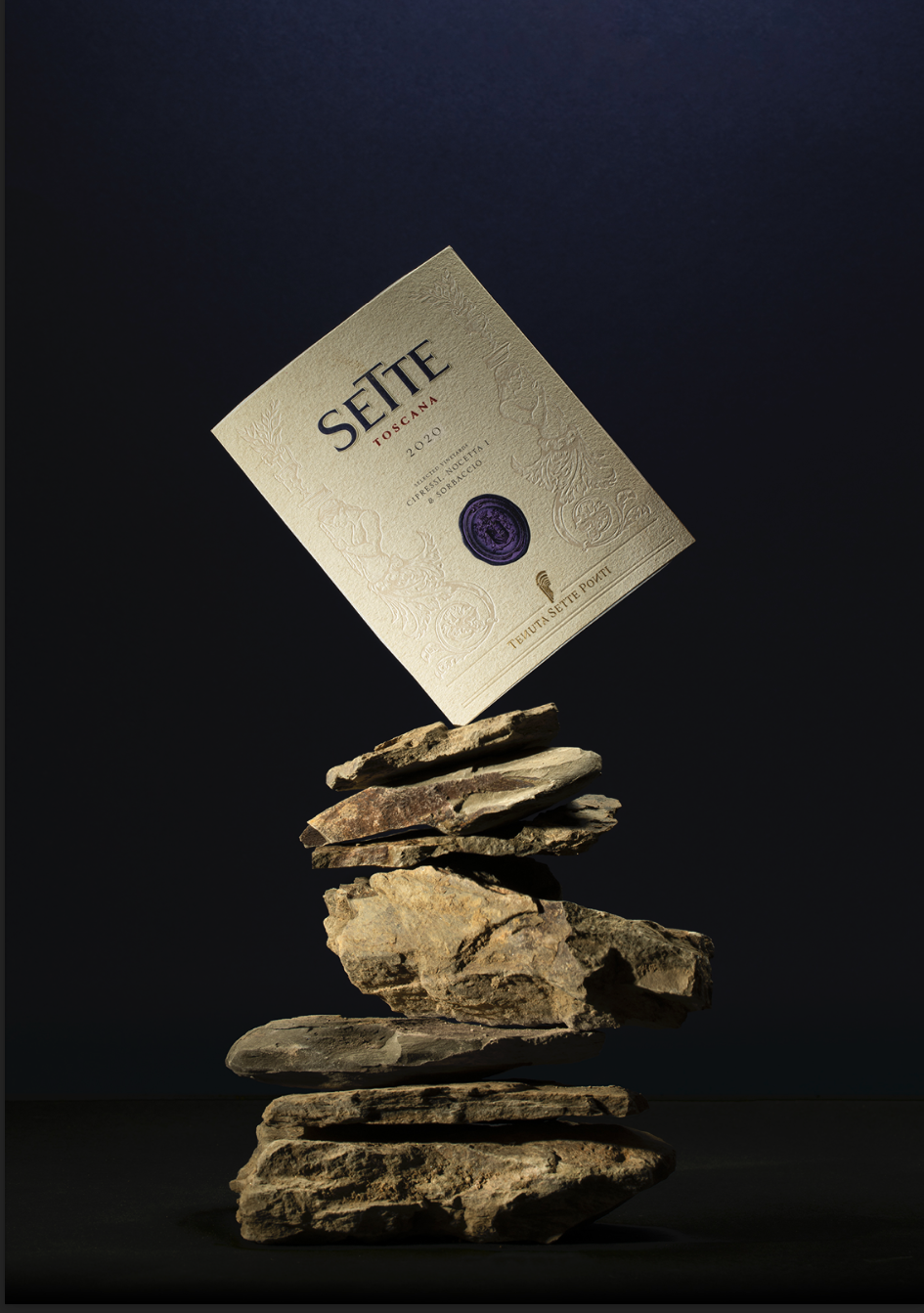
Q: What led you towards organic farming?
We believed it was the right thing to do — both in terms of quality and responsibility.
With wine, maybe the difference is not always something you can immediately taste, like with food. But people understand the effort. They understand that you are trying to do something in a more respectful way.
That has value.
Q: Has that way of thinking gradually shaped the wider estate as well?
Yes, naturally.
Once you start looking at things differently, it affects everything — how you manage water, how you treat the soil, how you work with what comes from the vineyard itself.
We produce compost from grape skins and from pruning. We use cover crops between the rows. These are small things, but over time they build something more balanced.
It’s a process. You don’t do one thing and see the result immediately.
“These are small things, but over time they build something more balanced.”
Q: Has climate change changed the way you think about the vineyards?
It has made things more complex.
People often think only about heat and drought, but in recent vintages we’ve also had a lot of rain. So the challenge is not one thing — it’s variability.
Resilience means being able to adapt, rather than preparing for a single outcome.
Q: How has your approach to style evolved over the years?
At the beginning, we used much more new oak. That was the style at the time, especially in the early 2000s.
Today, we’ve moved away from that. We use less oak and focus more on expressing the vineyard.
There’s been a broader shift in wine towards something more transparent, more connected to place.
“We use less oak and focus more on expressing the vineyard.”
Q: Earlier you mentioned “listening to the land”. What does that mean to you in practice?
It means paying attention.
You start to see that different parcels behave differently — one ripens earlier, another stays fresher, another has more warmth. The vines don’t tell you directly, but they give you signals.
Over time, you learn how to read those signals and respond to them.
Q: How important is food in how you think about wine?
Very important. It’s part of how we grew up.
Food is about family, about bringing people together. Wine sits naturally within that.
Even something simple — like bread and tomato — can be special if the quality is there. It’s the same idea as with wine. Where it comes from matters.
Q: Do you think people are becoming more interested in where wine comes from and how it’s made?
Yes, definitely.
People want to understand what’s behind a wine — not just whether they like it, but where it comes from, who made it, and how.
That’s why experience has become so important. When people visit, they connect with the place in a different way.
“When people visit, they connect with the place in a different way.”
Q: Finally, how do you balance history with change?
You respect what came before, but you don’t stand still.
There are always small adjustments — small changes over time. Not big shifts, but a gradual evolution.
It’s about staying true to your identity, while continuing to learn.