Aaron Potter and Laura Hart on Creating Places People Want to Return To
When Aaron Potter and Laura Hart began imagining the restaurant they would one day open together, they weren't thinking about trends, concepts or creating the next fashionable opening.
Instead, they found themselves returning to a feeling.
It was the feeling they had experienced in neighbourhood restaurants across Spain and Italy — places where hospitality felt effortless, food and wine were woven naturally into everyday life, and guests returned not because they were chasing novelty, but because they felt a sense of belonging.
During the reflection of the pandemic, that vision gradually took shape. What began as conversations about a future project evolved into something much more tangible. Together, they started to imagine every detail: the food, the wine, the atmosphere and the kind of experience they wanted guests to have.
"We spent so much time discussing every detail," Aaron recalls. "It reached a point where it felt impossible not to pursue it."
Today, Wildflowers has established itself as a much-loved neighbourhood restaurant in Belgravia, while Bar Flor has developed its own identity as a lively and sociable expression of Mediterranean bar culture. Together, they reflect a shared belief that hospitality is ultimately about generosity, community and creating places people want to return to.
In this conversation, Aaron and Laura speak with Tom Owtram about opening a restaurant together, the influence of Spain and Italy on their approach to hospitality, building Wildflowers and Bar Flor, and why authenticity remains at the heart of everything they do.
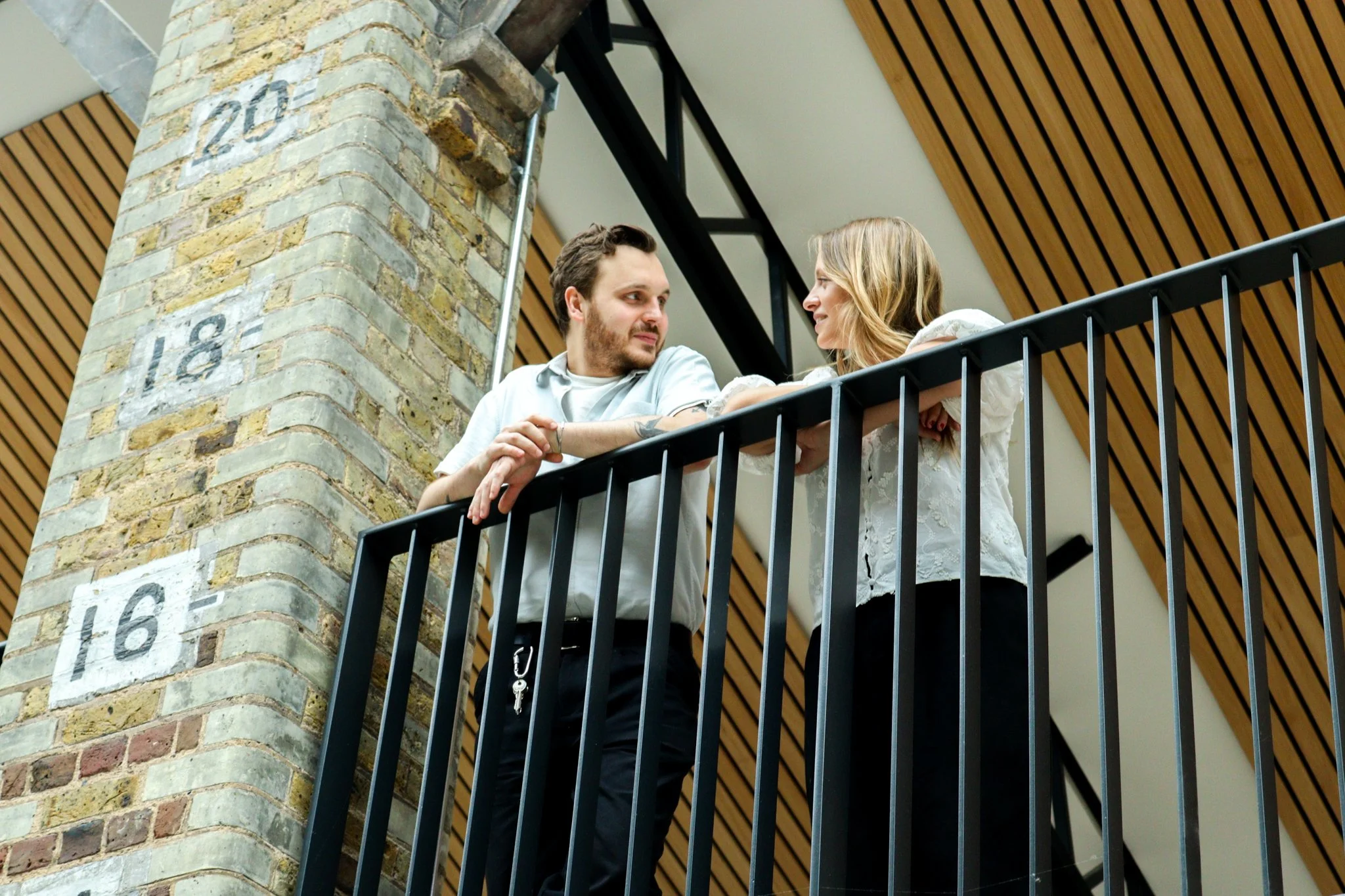
Photo Credit: Wildflowers
From Idea to Reality
Tom Owtram: Can you take us back to where you both were personally and professionally at the point you decided to open a restaurant together? What nudged you from "someday" into actually committing to it?
Aaron Potter: At that point in my career, I'd been fortunate enough to work as Head Chef in several brilliant restaurants, but the ambition had always been to open a place of my own. I wanted the opportunity to make the decisions — not just creatively in terms of the food and style of cooking, but also around how the restaurant operated, the culture we built and how we looked after and developed our teams.
On a personal level, we wanted to create something that was truly ours and that could form part of our future together.
It was during Covid, when so many people were reassessing what they wanted from life and work. Like everyone else, we suddenly had a bit more headspace. Instead of rushing from service to service, we had the time to really think about what our ideal restaurant would look and feel like.
As we started developing the idea that became Wildflowers, the vision became increasingly clear and fully formed. We spent so much time discussing every detail — from the food and wine to the atmosphere and guest experience — that it reached a point where it felt impossible not to pursue it.
Hospitality Beyond the Dining Room
Tom: How did your individual backgrounds, travels and cultural reference points shape the way you think about hospitality? What values felt non-negotiable when you began imagining Wildflowers?
Aaron: The most important thing for us with the food at Wildflowers was that it evoked the feeling we experienced in restaurants across Italy and Spain. The hospitality was relaxed and genuine, and the food was of an incredibly high standard, but it wasn't necessarily white-tablecloth fine dining. That balance was something we really wanted to emulate.
Laura Hart: Spain and Italy were hugely influential reference points in shaping how we think about hospitality. In both places, hospitality feels much more embedded in everyday life. Restaurants are supported by their local communities, careers in the industry are respected, and local restaurants sit at the heart of neighbourhood life.
We wanted to create an environment where hospitality felt equally genuine, warm and welcoming.
One of our non-negotiables from the beginning was authenticity. Everything we created had to feel true to us, rather than following trends or building a space that felt too tied to a particular moment. Our ambition was always to create a local restaurant with real longevity — somewhere that could still be thriving and serving its community in ten or twenty years' time.
Growing up, my mum was always a great host. I watched her pour care into every detail, not for recognition, but because making people feel loved came naturally to her. Looking back now, I realise how much of hospitality begins there — in generosity, in creating moments that make people feel something.
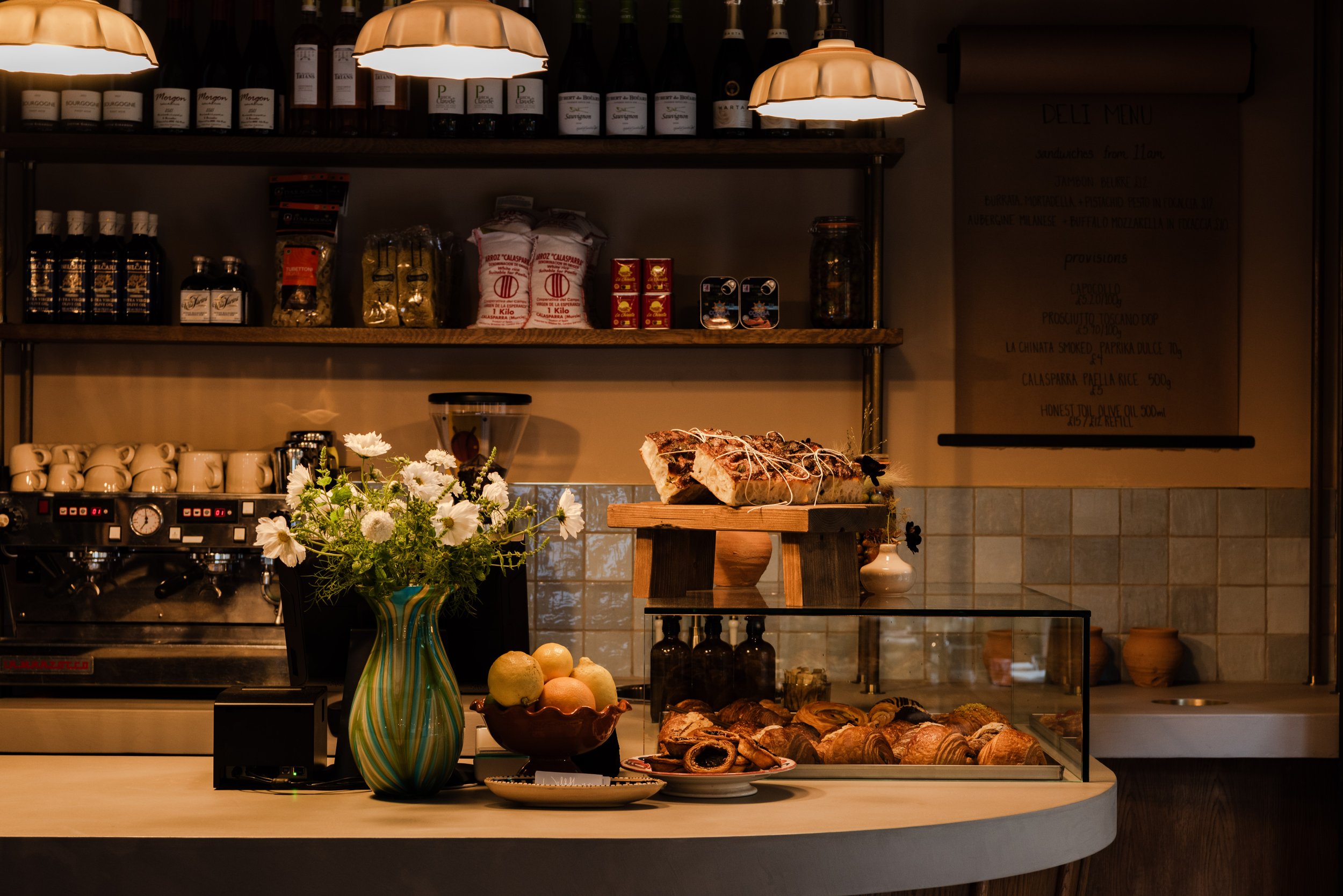
Photo Credit: Rebecca Dickson
Creating a Sense of Belonging
Tom: What were you consciously trying to create in contrast to other restaurants you'd worked in or spent time in? And what surprised you most once guests actually started coming through the door?
Laura: Culturally, we wanted to create something that felt like the kind of place you stumble across on holiday and instantly feel at ease in.
When lockdown ended, the restaurants we were most excited to return to were the ones that gave us that feeling of comfort and familiarity. That really inspired what we wanted Wildflowers to become.
What has surprised me most is the depth of the relationships we've built with our guests. Aaron and I are still in the restaurant most days, and over time we've become part of people's lives.
We have the privilege of helping people celebrate milestones, anniversaries and special moments, and it's incredibly rewarding to know Wildflowers has become a meaningful place for so many people.
A Restaurant Shaped by Its Neighbourhood
Tom: How important was finding the right physical setting for Wildflowers, and how has being part of the Belgravia neighbourhood influenced the way the restaurant has evolved?
Aaron: The location was hugely important for us. From the outset, we knew we wanted Wildflowers to be a true neighbourhood restaurant, so it was essential that there was a strong local community around us.
We wanted people to be able to walk down the street, pop their heads in and decide to have dinner on a whim.
The physical space itself was also a major factor. We always wanted an open kitchen so that guests would immediately feel the energy and atmosphere of the restaurant as soon as they arrived.
This site ticked all the boxes.
Laura: From an interiors perspective, we always wanted Wildflowers to feel welcoming and personal, almost as though we were opening the doors to our own home.
We're fortunate to be surrounded by some of London's most beautiful design-led and craft-focused interiors shops, which attract a wonderfully creative community to Belgravia. It felt important that the restaurant sat naturally within that landscape and reflected the same appreciation for craftsmanship and thoughtful design.
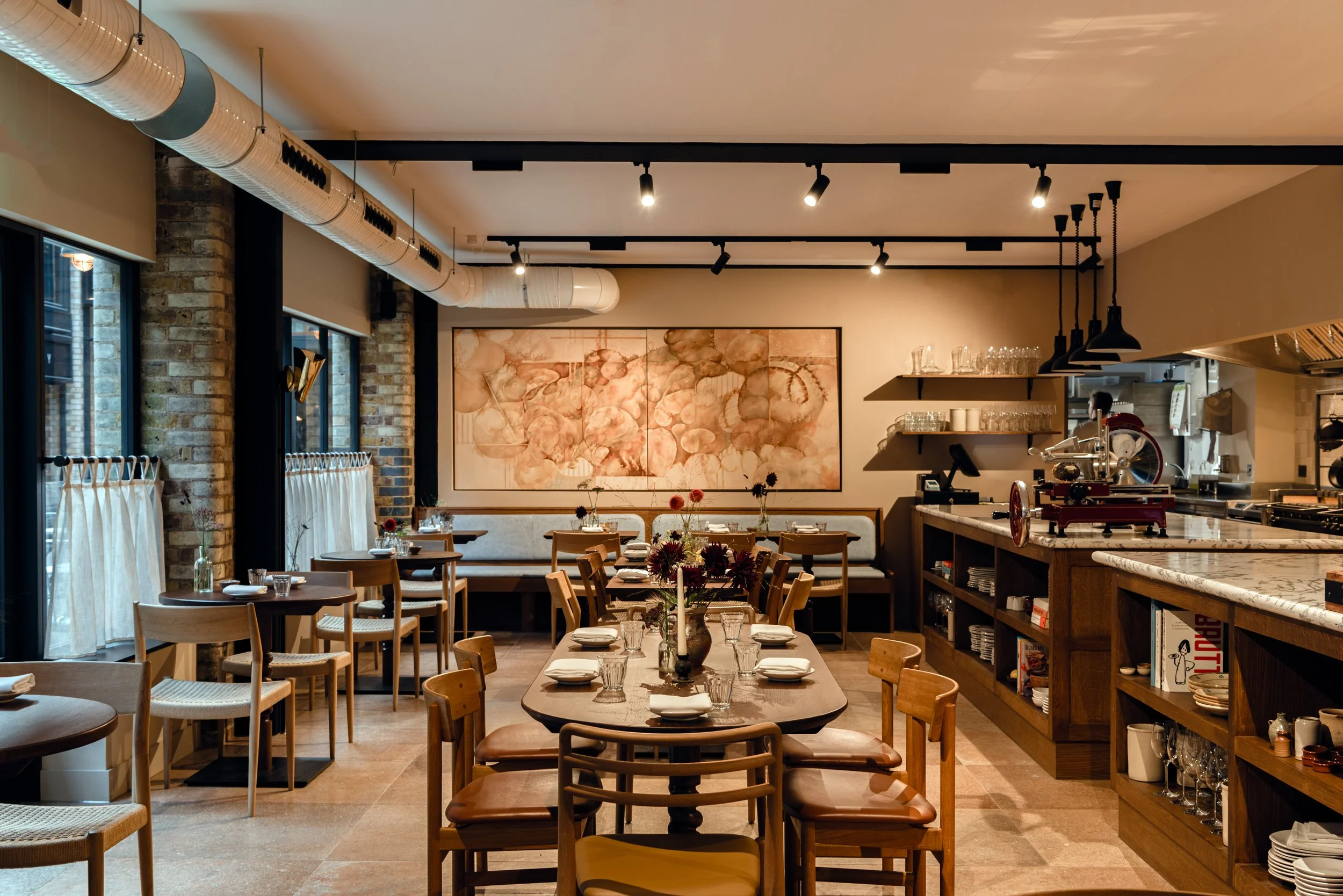
Photo Credit: Rebecca Dickson
Wine as Part of the Experience
Tom: How did you approach building the wine list at Wildflowers, and what role do you see wine playing in shaping the overall experience?
Laura: It's a Mediterranean-leaning list because it's important that the food and wine complement each other. That also goes back to where we're sourcing from — smaller growers and producers working with a similar philosophy to the way Aaron approaches ingredients.
Accessibility is really important as well. There are entry-level wines that are interesting and approachable, but you can also spend more if you want to.
Upstairs at Bar Flor we can be a little more playful and adventurous with the list, reflecting the more relaxed atmosphere. Downstairs at Wildflowers, the focus leans towards gastronomic wines designed to complement and elevate the dining experience.
Across both spaces, though, the aim is the same: for wine to feel like an integral part of the overall experience rather than simply something that accompanies the meal.

Photo Credit: Rebecca Dickson
The Birth of Bar Flor
Tom: At what point did you realise that the space upstairs wanted to become its own expression rather than simply an extension of the restaurant below?
Aaron: We started thinking about it around the one-year anniversary of Wildflowers opening.
Wildflowers was always going to be the core of the business, so we wanted to focus all our attention on getting that right first.
The bar was always a beautiful space, but people were mainly using it for a pre- or post-dinner drink. We felt there was an opportunity to create something more.
Laura: Having a year of trading behind us helped inform the decision. We could see how people were using the room and realised it needed its own identity.
We took inspiration from some of our favourite places in Spain and Italy. It still has the Wildflowers DNA, but it's more relaxed, with small plates and food that can be served from behind the bar rather than from the kitchen.
Creating a different destination gave people another reason to visit us and experience the building in a different way.
Inspired by Spain
Tom: Spanish bar culture, particularly in places like San Sebastián and Barcelona, runs strongly through Bar Flor. What is it about those spaces that continues to inspire you?
Aaron: We absolutely love those places.
What stays with you is the rhythm of the evenings. You move from bar to bar, have a few pintxos, a couple of drinks and maybe end up dancing in the street with locals.
It's incredibly social, vibrant and unstructured in the best possible way.
That feeling was a huge inspiration for Bar Flor. The food and drinks still share the same ethos as Wildflowers in terms of provenance and quality, but the atmosphere is different. It's more relaxed, more sociable and perhaps a little more spontaneous.
Laura: You're not necessarily sitting for hours and having a long dinner. You're popping in for a few drinks and snacks, much as you would in Spain.
We don't have the same bar-hopping culture in London, but I think people are craving it. Eating out has become expensive and this more informal, social style of hospitality offers another way for people to spend time together.
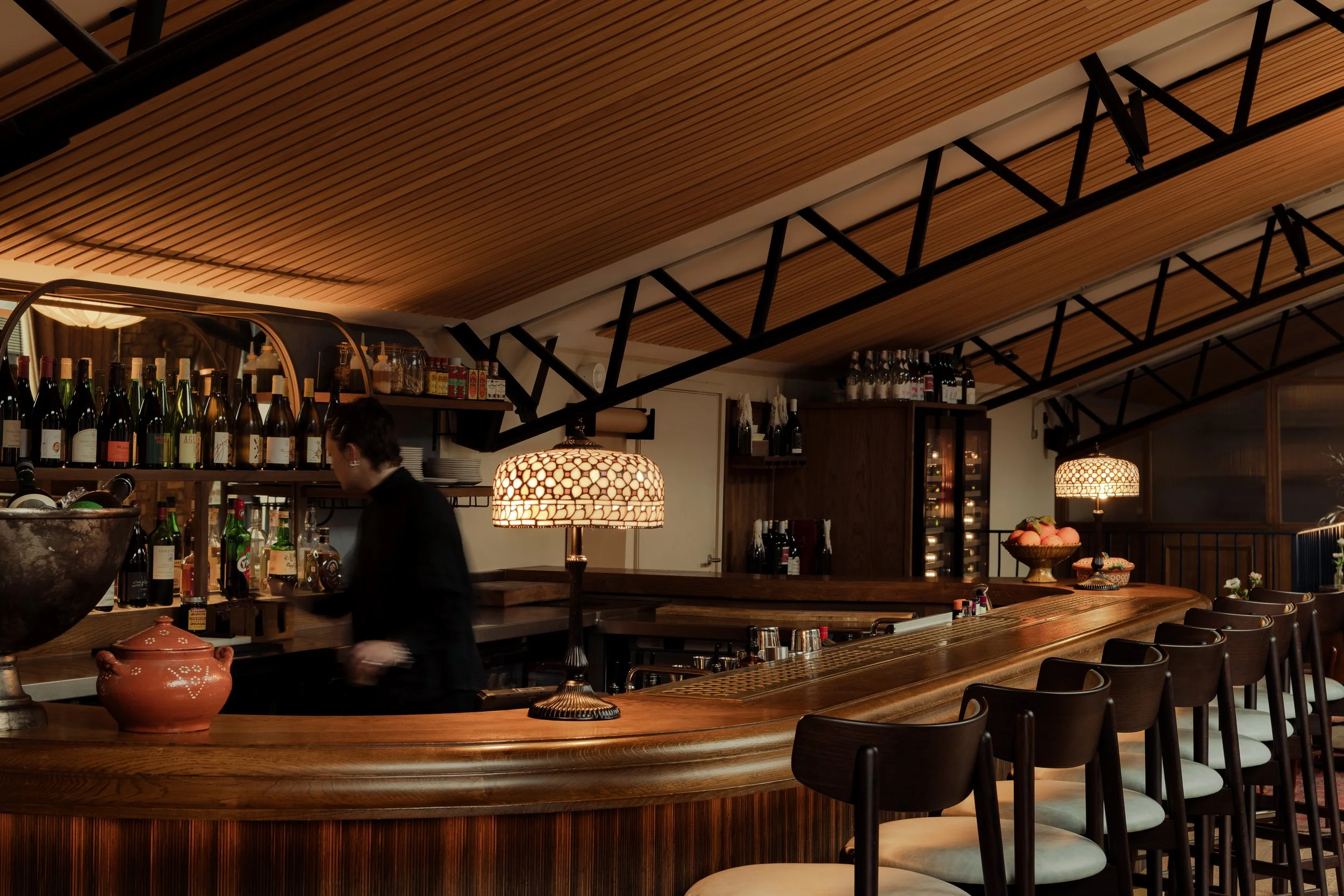
Photo Credit: Rebecca Dickson
Curiosity and Discovery
Tom: The rotating by-the-glass list at Bar Flor champions smaller producers and lesser-known regions. What excites you about encouraging curiosity around wine?
Aaron: People are more willing to experiment in a bar.
It's much easier to convince someone to try an interesting glass than an interesting bottle.
If they love it, great. If they don't, that's fine too. There isn't the same sense of commitment.
Laura: It creates a sense of fun around wine.
A glass gives people the opportunity to explore without feeling like they're making a big decision. It makes wine feel more flexible, informal and accessible.
That suits the way people use Bar Flor. They might be coming in for a drink and a snack rather than building an entire meal around a bottle of wine.
Building Something Together
Tom: How has your working relationship evolved since opening, and how do you balance creative energy with the realities of running hospitality businesses?
Aaron: We work together every day, but not always side by side.
Laura is very good at making sure I don't disappear into the kitchen permanently. She'll pull me into the other parts of the business when needed.
Otherwise, I'd probably be perfectly happy standing behind the pass all day.
Laura: Because we're both creative, we get excited by the same things — particularly the details involved in building something together.
Of course, running hospitality businesses right now comes with challenges, and we have to be realistic about that. Flexibility is essential.
We've also built an incredible team around us, which allows us to spend time thinking about the bigger picture rather than becoming consumed by the day-to-day.
Aaron: Because we're both in the business, we understand what the other person is dealing with.
If one of us comes off a difficult service, the other knows exactly what that means.
Ultimately, we're in it together and working towards the same goal.
Looking Ahead
Tom: Looking ahead, what should people make sure they experience when visiting Wildflowers or Bar Flor?
Aaron: Experience the whole building.
Come upstairs for a drink, soak up the atmosphere, read through the menu and try something you won't find downstairs.
At Wildflowers, I'd always recommend the set menu because it brings together the dishes we're most excited about and gives guests the best sense of what we're trying to achieve.
Laura: Try what's in season.
Everyone says it, but it genuinely matters. The dishes built around those seasonal ingredients are often when the food is at its best.
Aaron: And try the interesting wine.
It's not always the most expensive bottle that surprises you. Sometimes there's a wine from somewhere unexpected that completely changes your perspective.
Most importantly, use the team.
Ask them what they're excited about, what they're drinking and what they would choose themselves. That's how we like to approach hospitality.
We want guests to make the most of everything the restaurant has to offer.